
Florence Headquarters
Four Centuries of Learning Above Florence
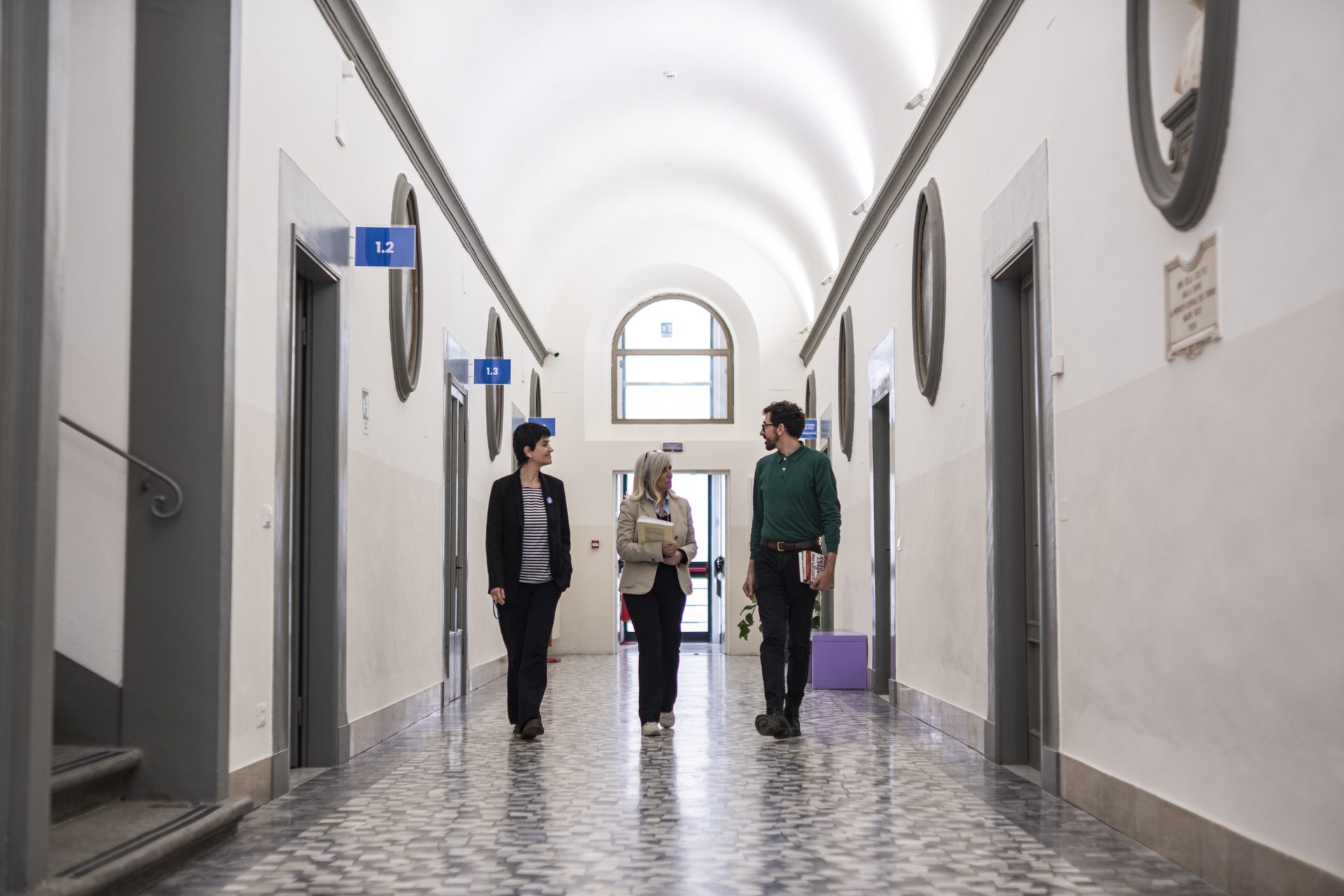
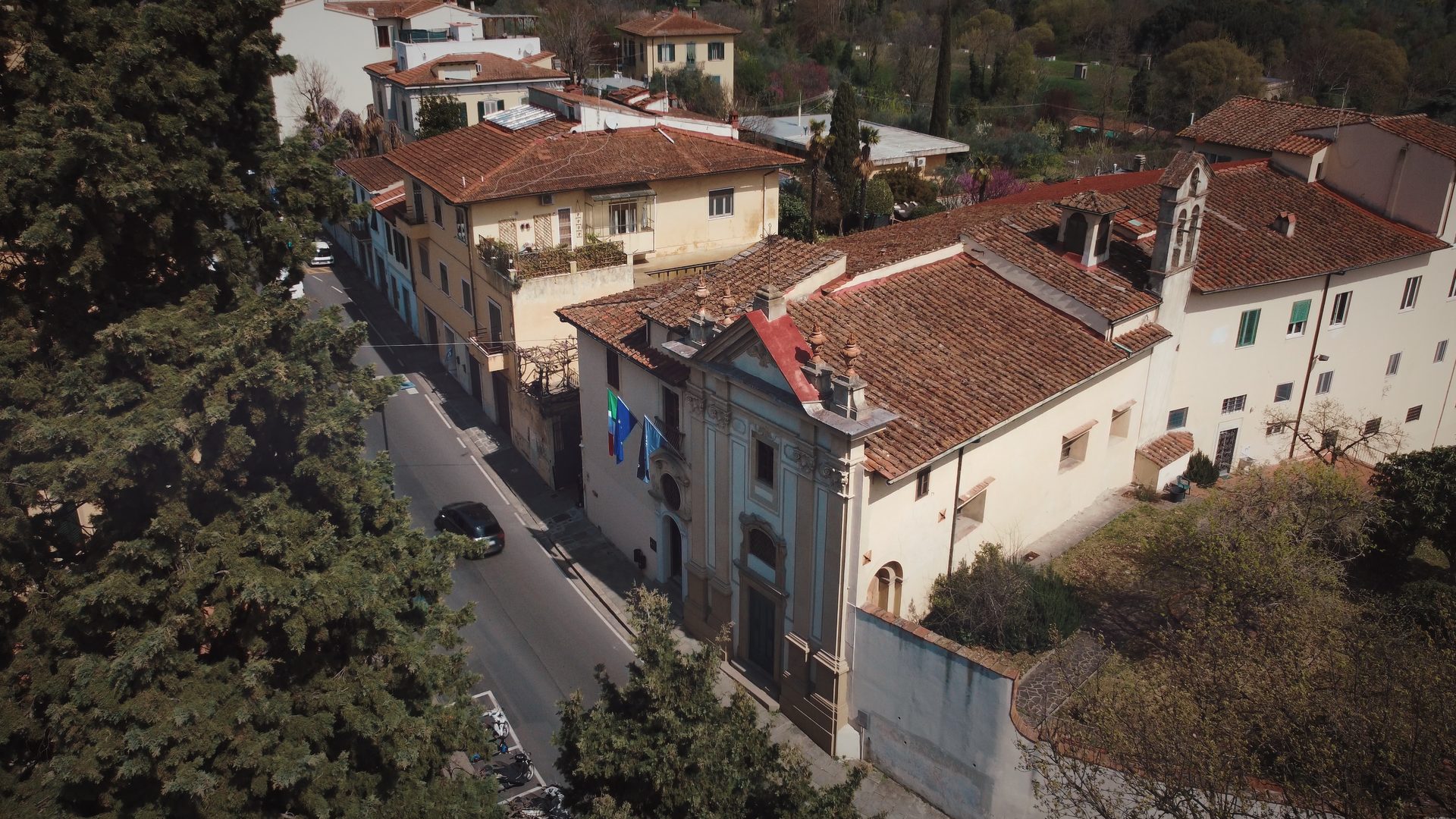
Unicollege's Headquarters occupies part of the historic Il Pellegrino complex, set along the old road that leaves Florence toward Bologna and the Apennines. The site itself predates the university by centuries. Its name recalls the pilgrims and travelers who once approached Florence from the north, when this edge of the city marked the transition between the walled urban center and the Tuscan countryside beyond.
The Piarist Fathers — the Padri Scolopi — established themselves here in 1638, continuing a tradition centered on education, scholarship, and intellectual formation. Over the following centuries, the complex grew into the architecture still visible today: long corridors, cloister-like spaces, decorated interiors, gardens, and the adjoining Church of Santa Maria del Suffragio al Pellegrino. Nearly four hundred years later, students still come here to learn. The surroundings have changed. The purpose has not.
From the Piarists to the University of Florence
The history of Via Bolognese 52 is not simply architectural. It is unusually academic. When the University of Florence established its Faculty of Engineering in 1970, the new Faculty began its life here, at the Collegio del Pellegrino, before eventually moving to larger premises as it expanded. The humanities followed.
For many years, the complex was closely associated with the University of Florence's Philosophy Department, bringing generations of faculty members, scholars, and students through the same corridors. The succession is remarkable: Piarist education, Engineering, Philosophy, and now Unicollege.
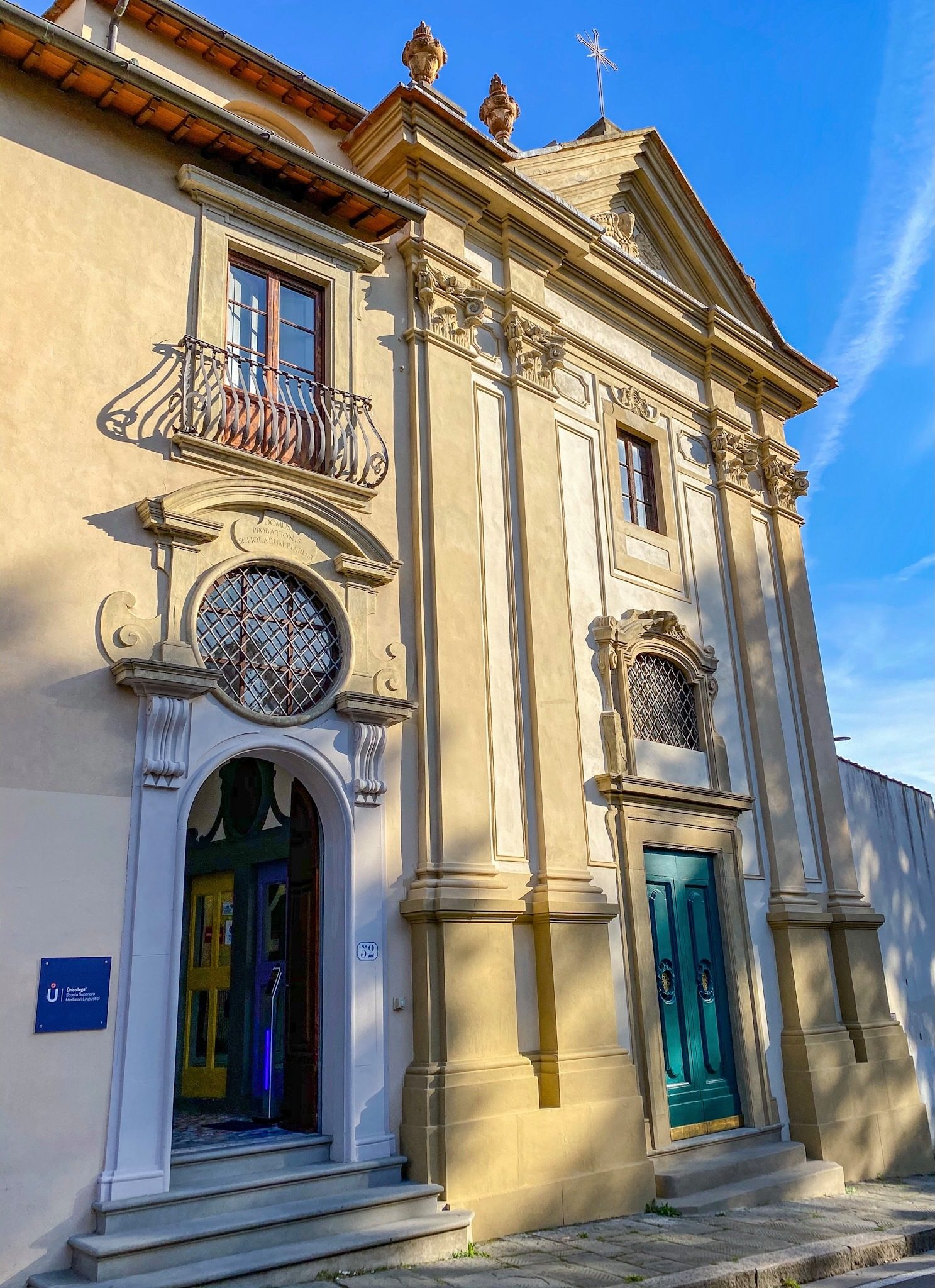
Each institution belongs to a different moment in the history of higher education, yet all have inhabited the same place. Unicollege therefore did not simply convert a historic building into a university. It inherited a building that already had a university life of its own.
A Historic Building Still Doing What It Was Built to Do
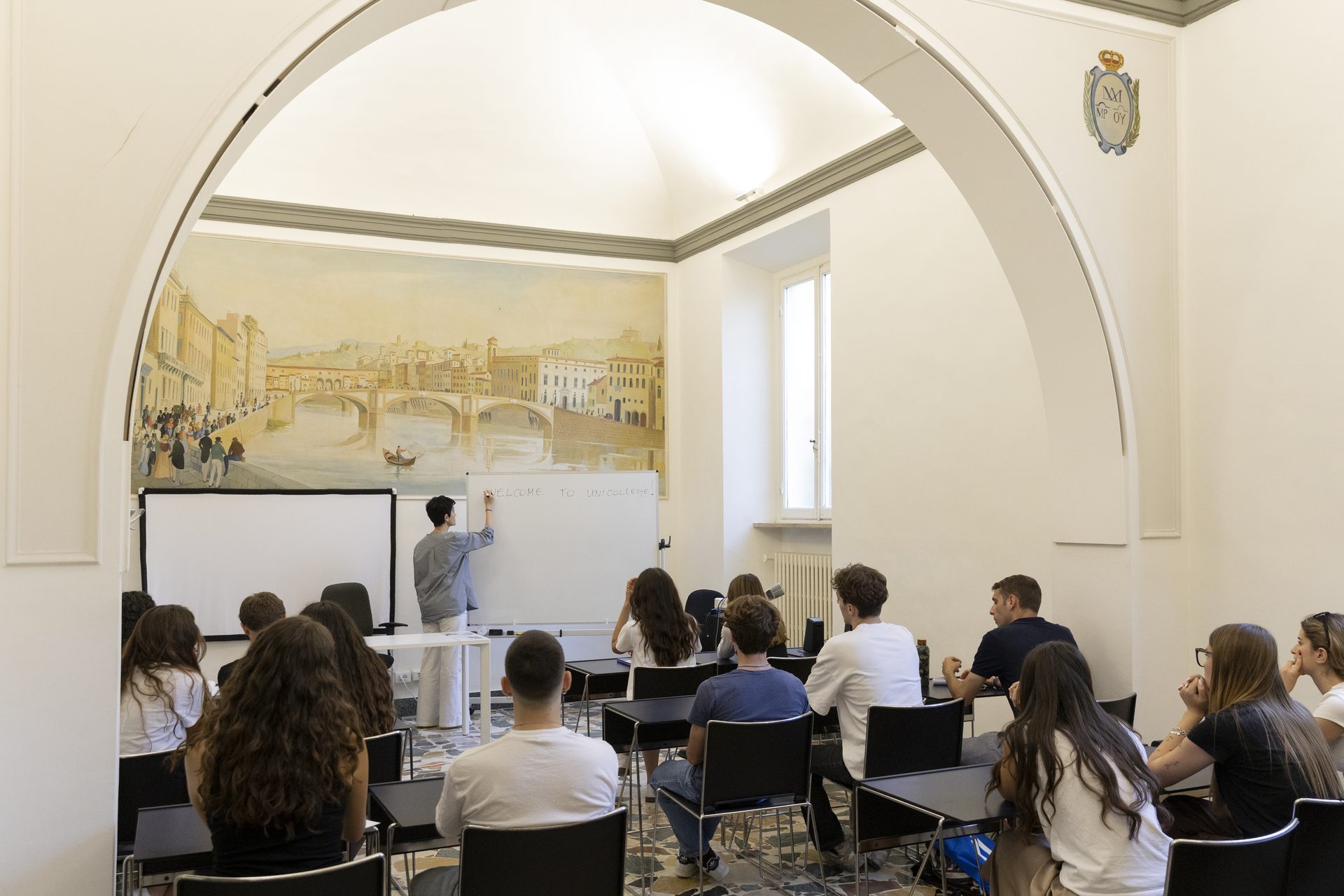
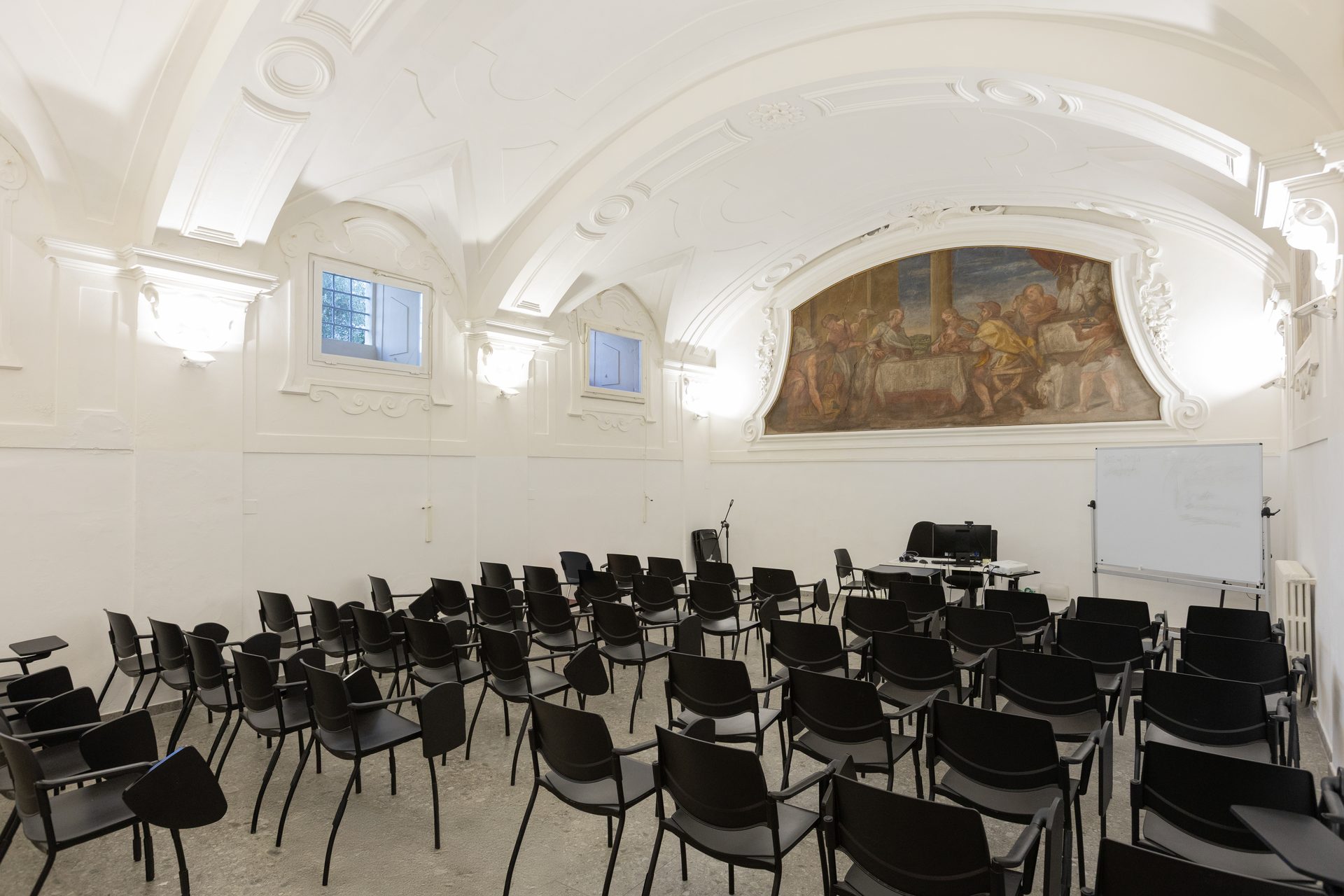
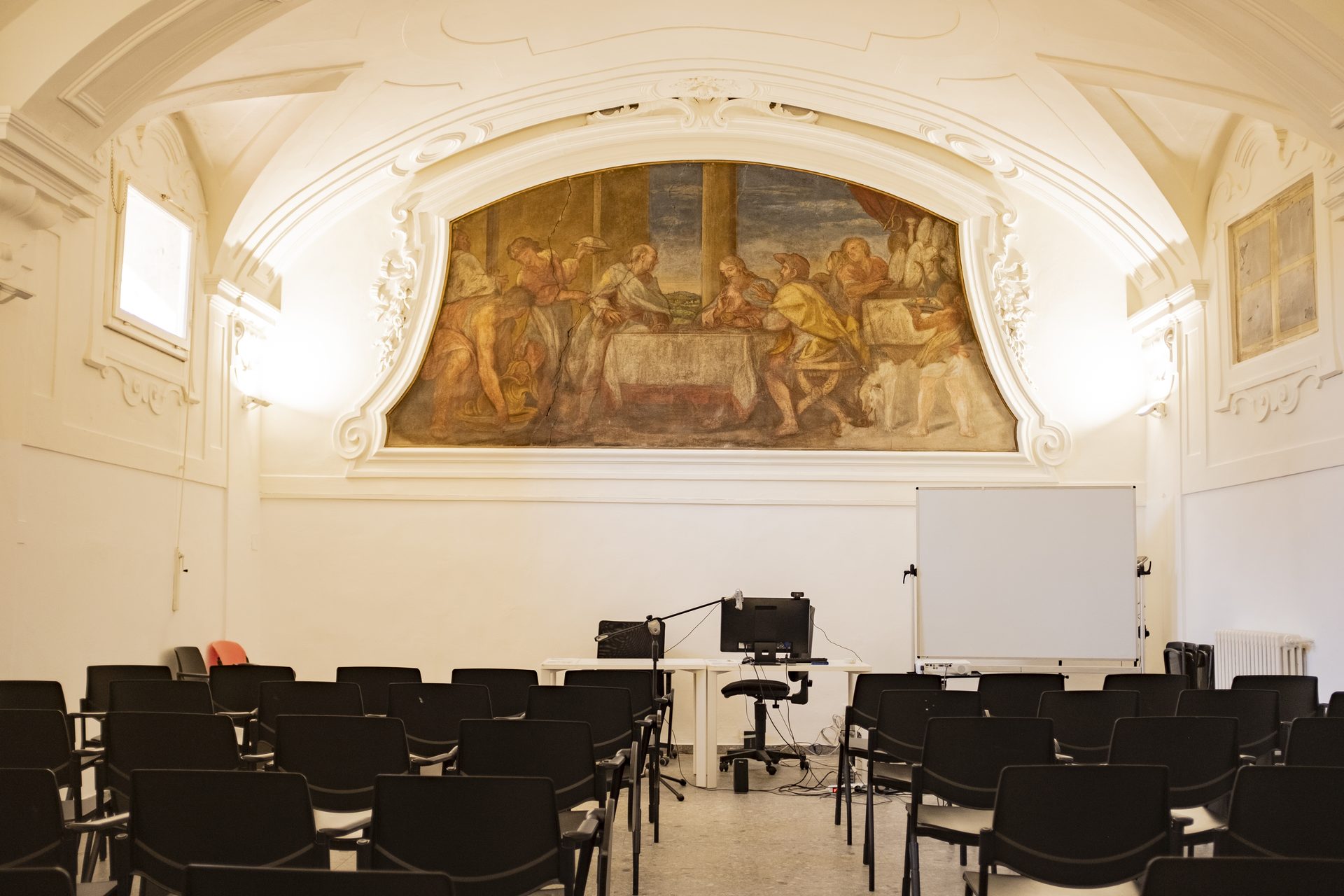
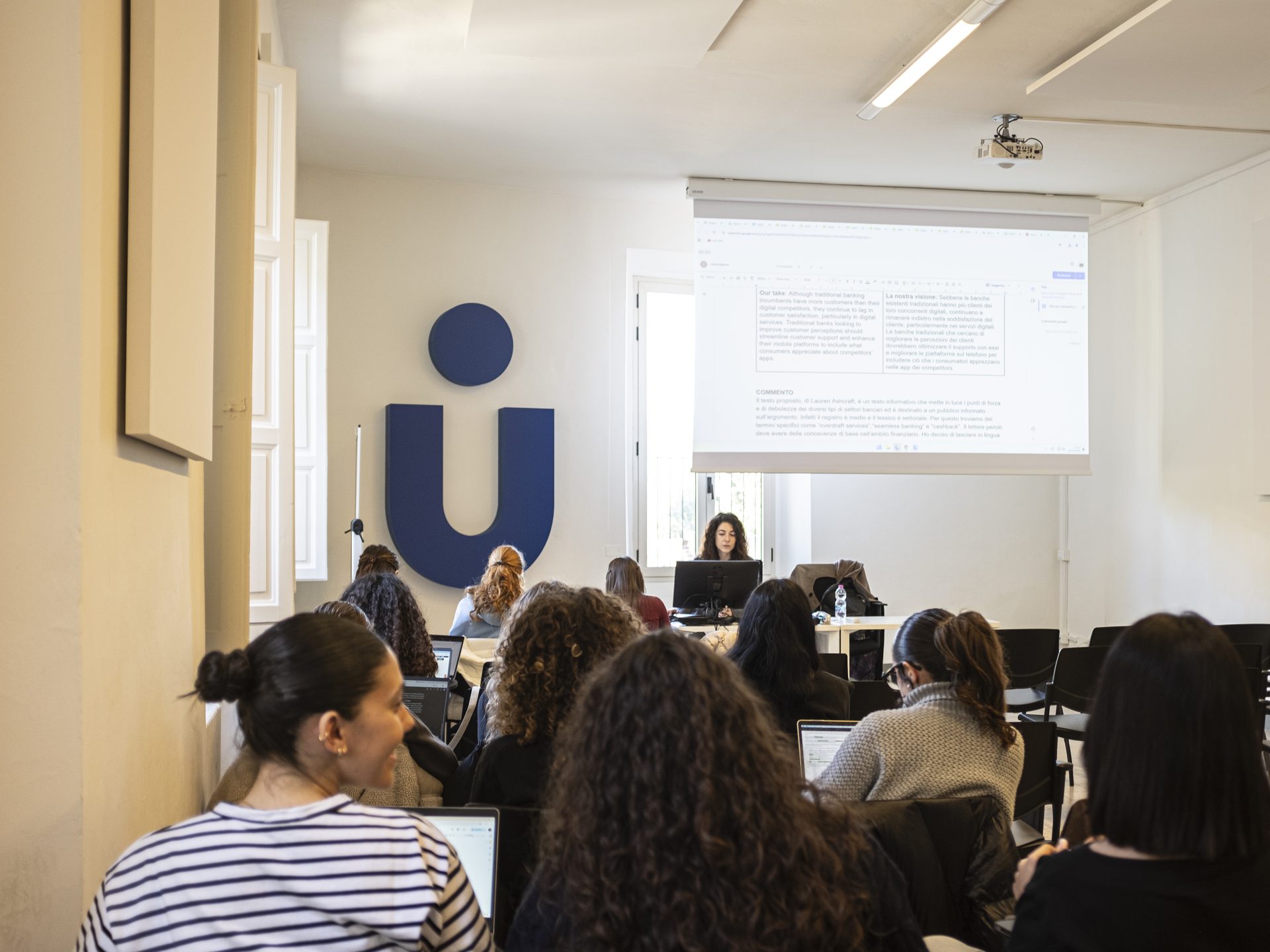
The most striking spaces at Florence Headquarters are not preserved behind ropes. They are used. Classes, lectures, meetings, and academic events take place in rooms where frescoes, painted ceilings, historic details, and centuries-old architectural features remain part of the everyday setting.
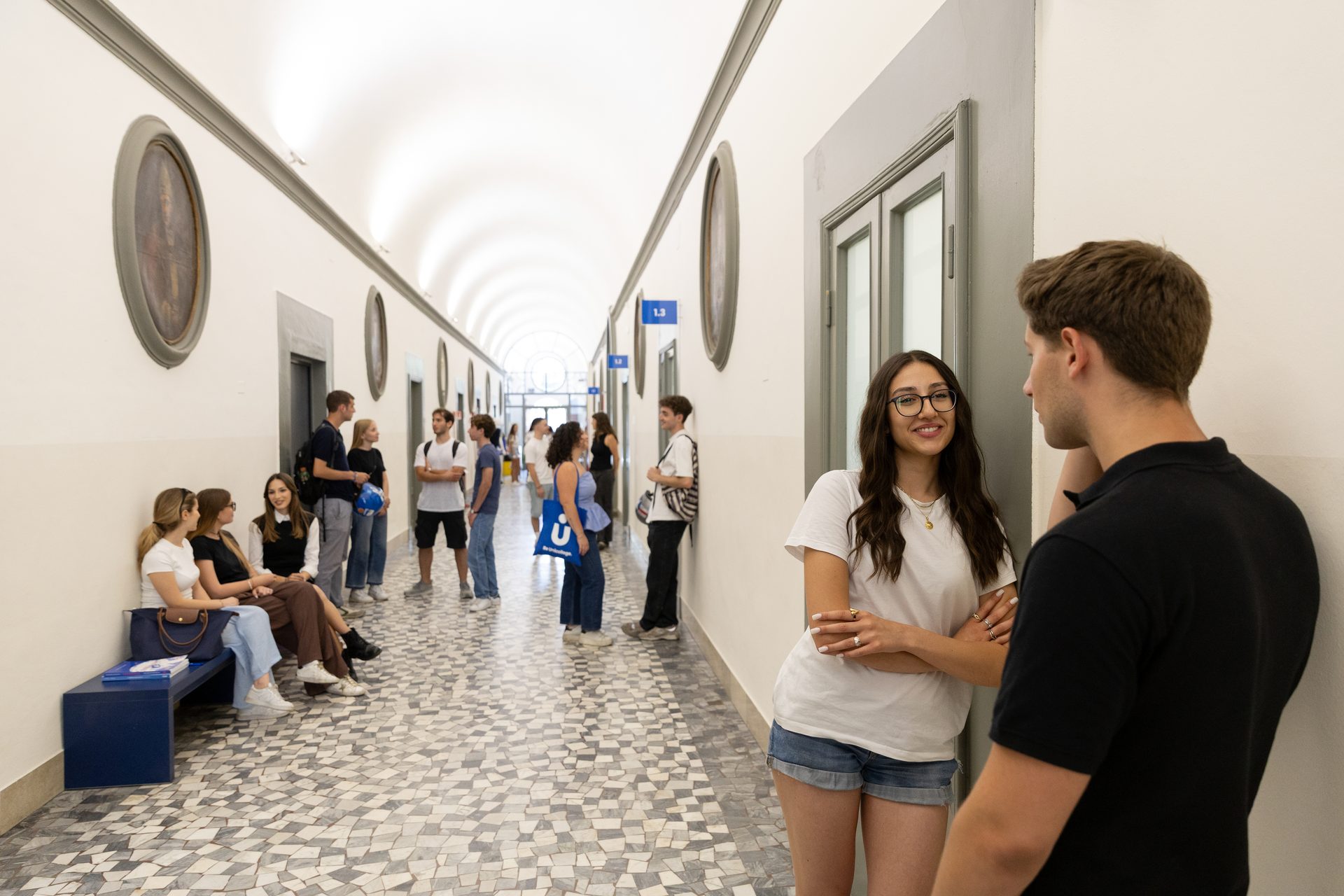
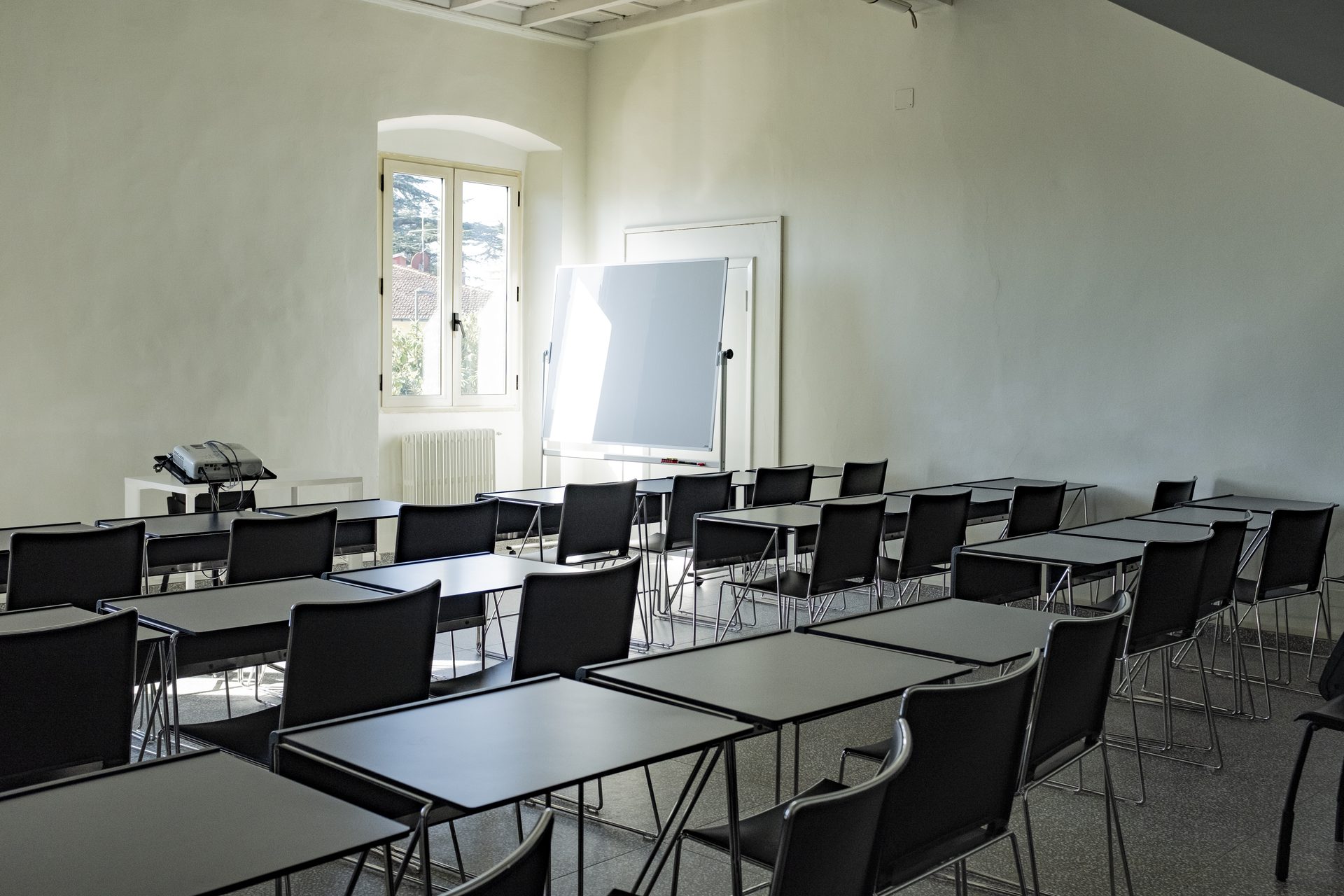
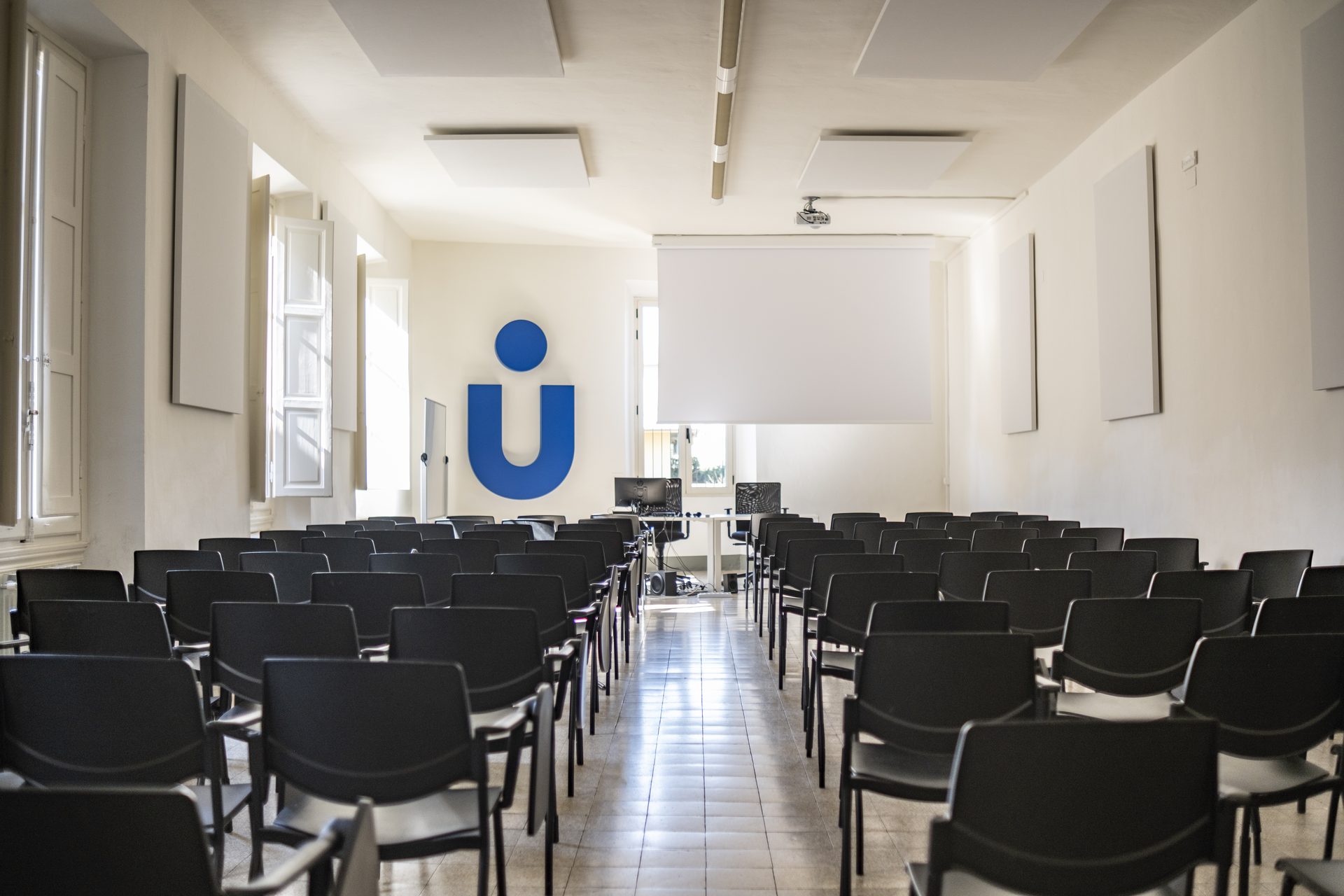
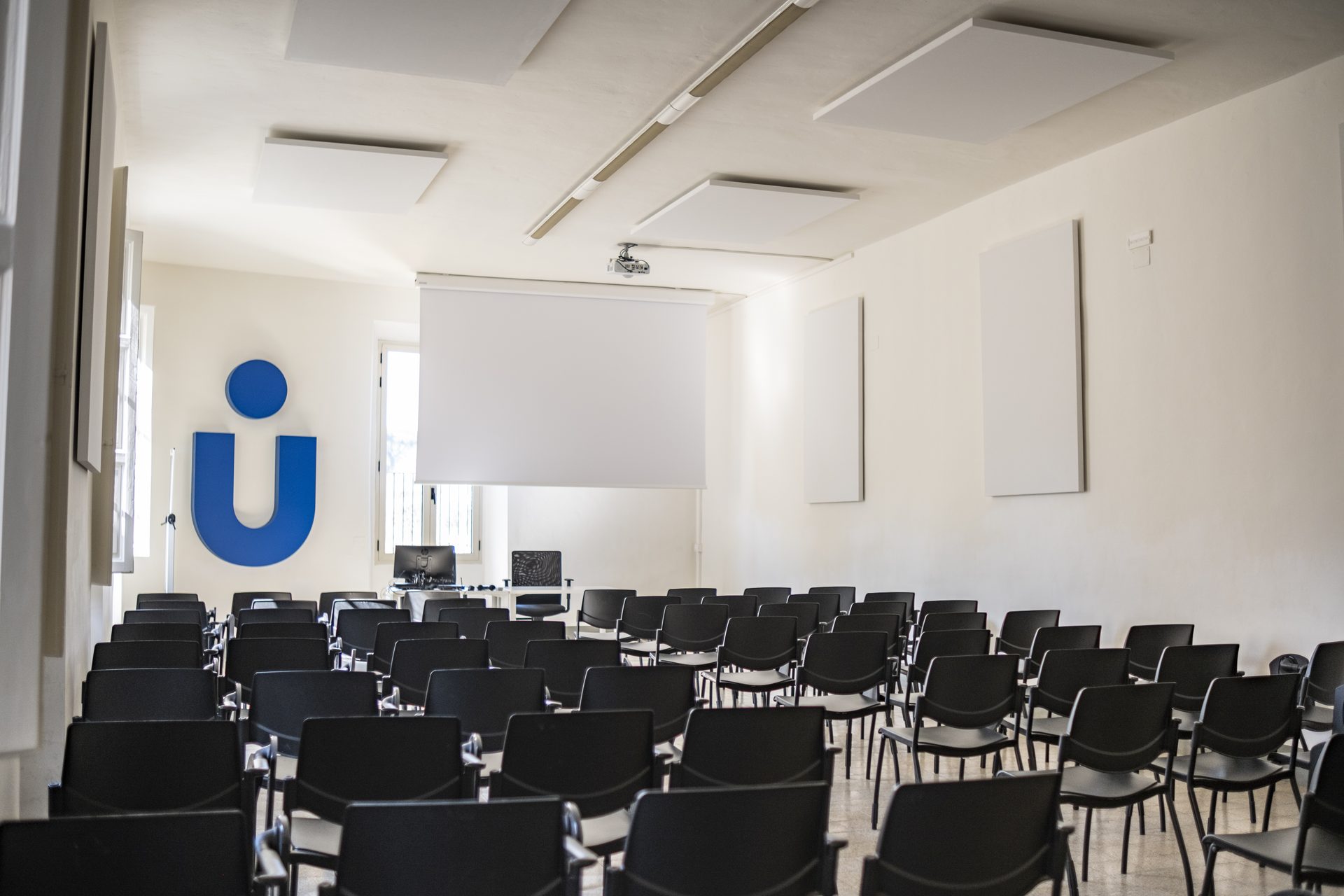
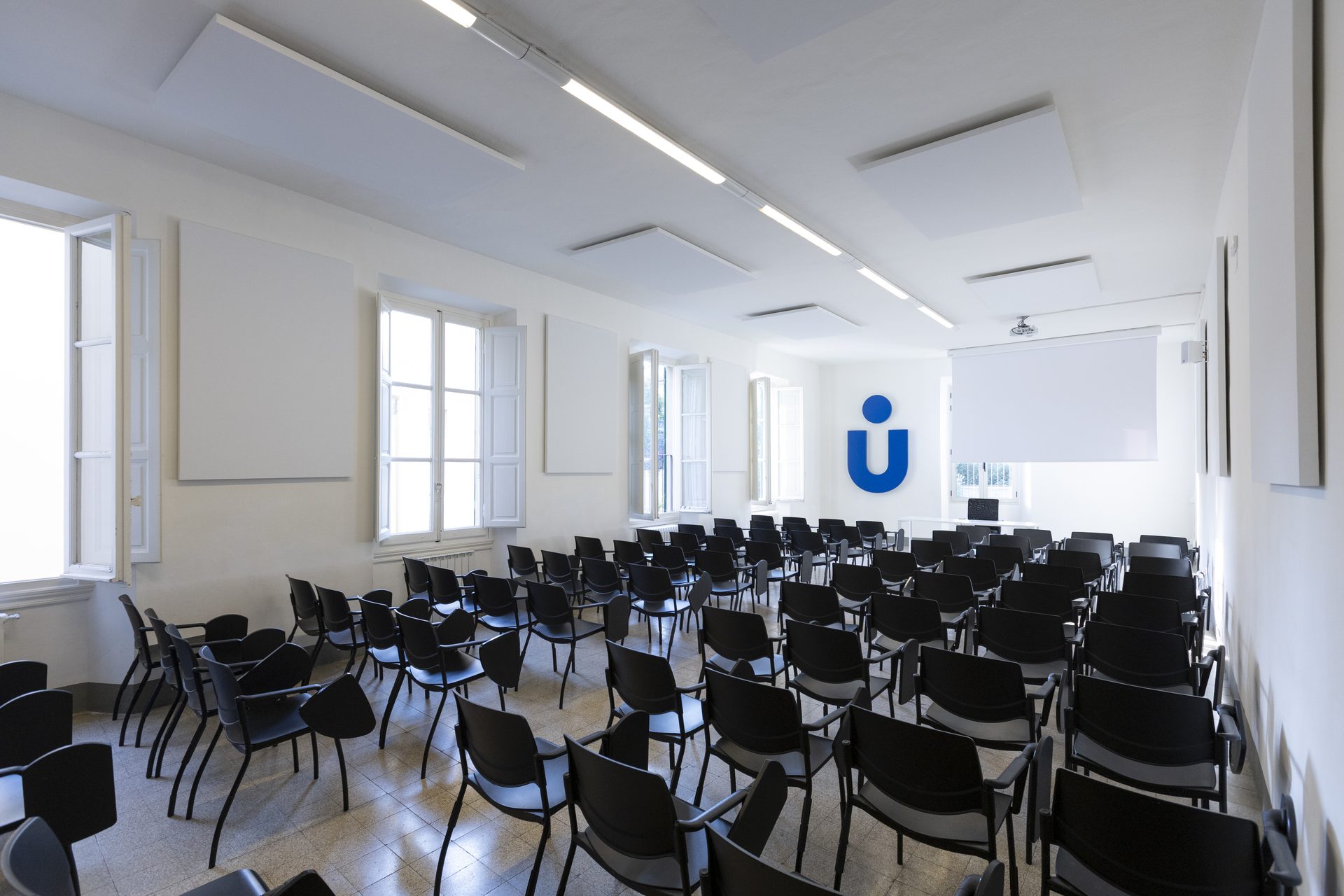
A language class may take place beneath a decorated ceiling. A seminar may occupy a room whose proportions belong to another century. Contemporary screens and teaching technology sit naturally alongside spaces shaped long before either existed. This is one of the campus's defining qualities: history is not presented as scenery. It remains part of the working university. Across the Headquarters are 14 teaching rooms, a 150-seat auditorium, study areas, a library, academic offices, and dedicated spaces for student services.
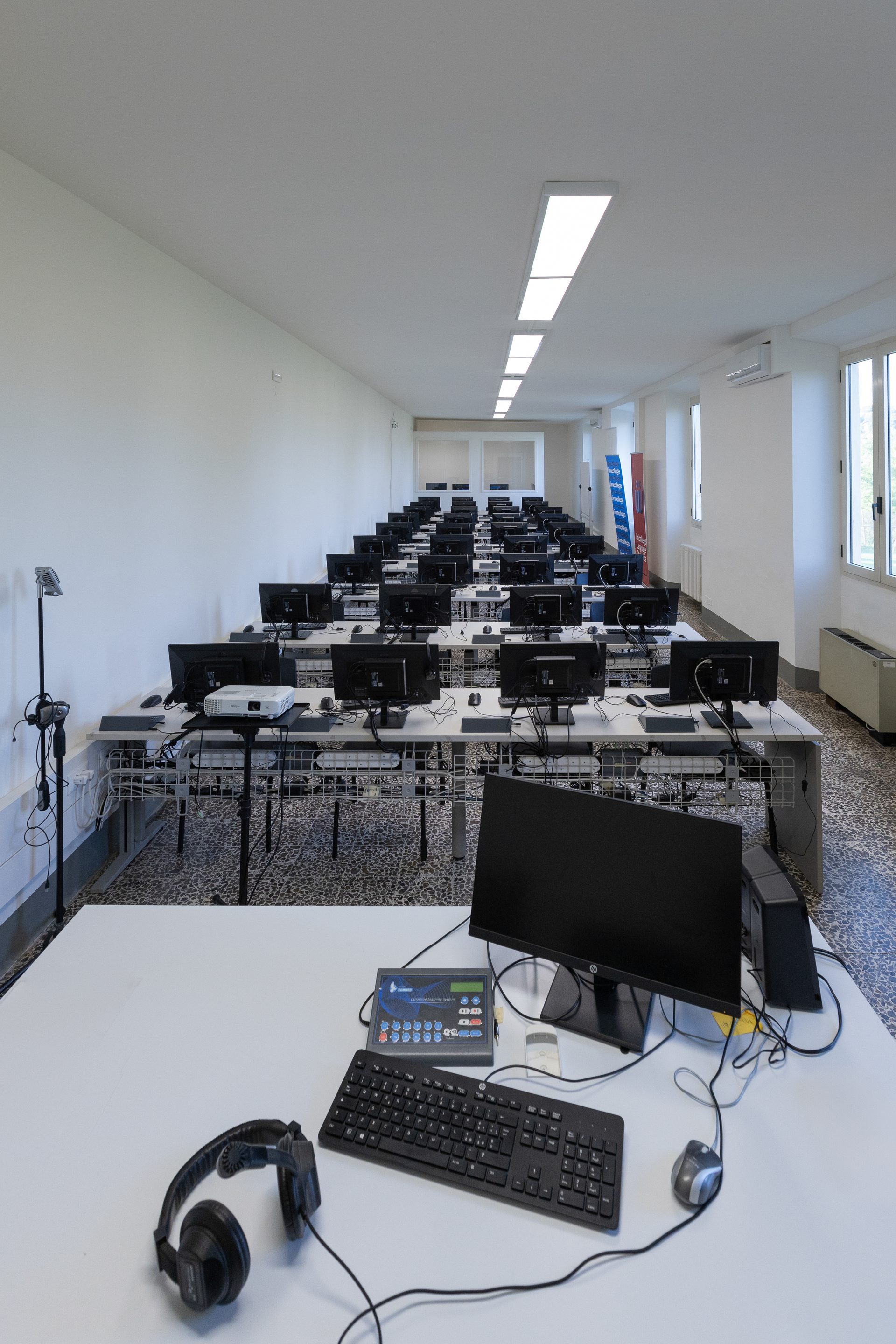
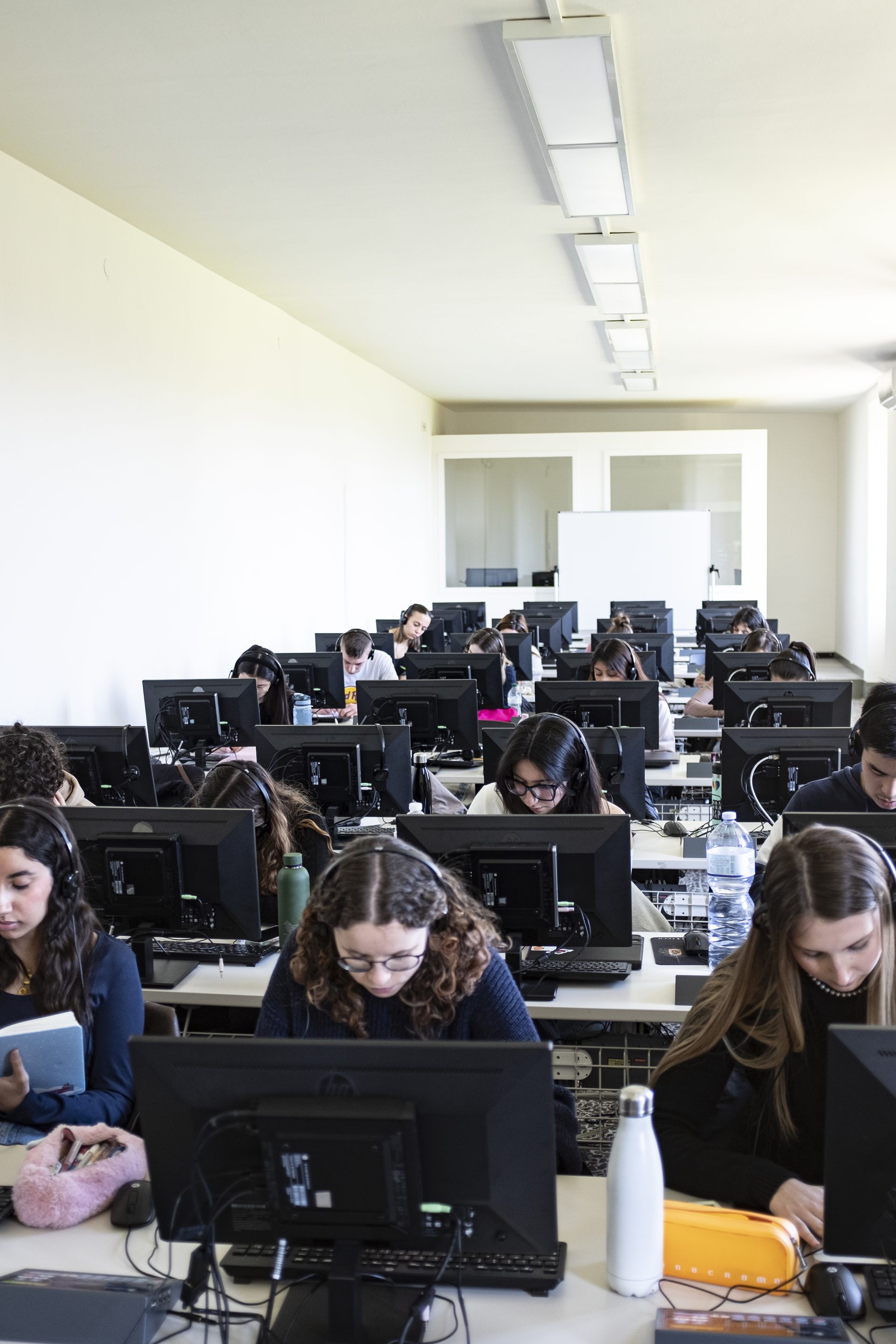
The IT and Language Laboratory, with 36 workstations and interpreting facilities, supports language learning, digital teaching, and professional interpreting practice. The Front Desk sits at the center of daily campus life, giving students a direct point of contact for practical questions and university services. Academic administration and the International Office are based within the same complex, keeping teaching, advising, and student support closely connected.


8,000 m² of Gardens and Olive Trees
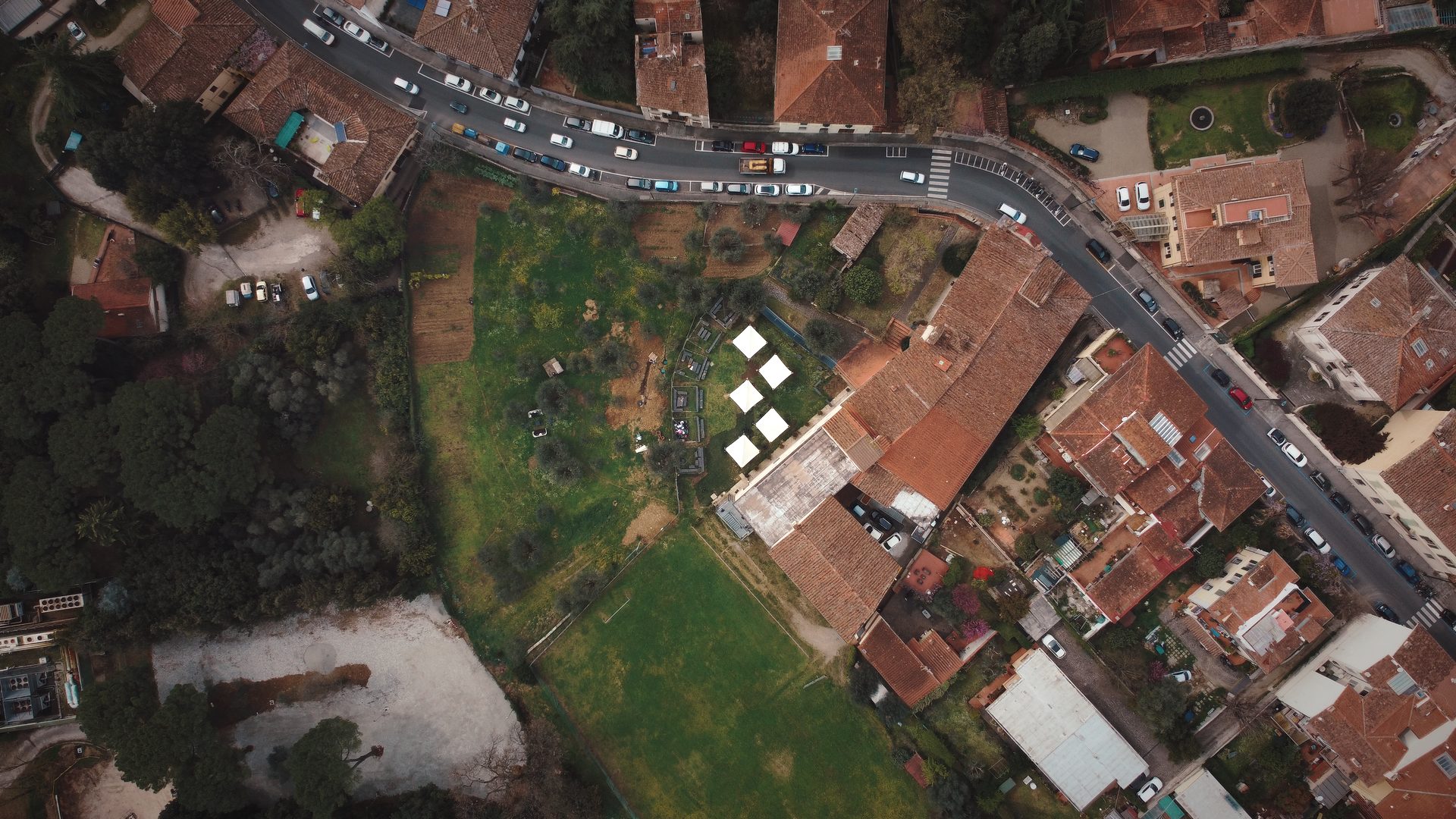
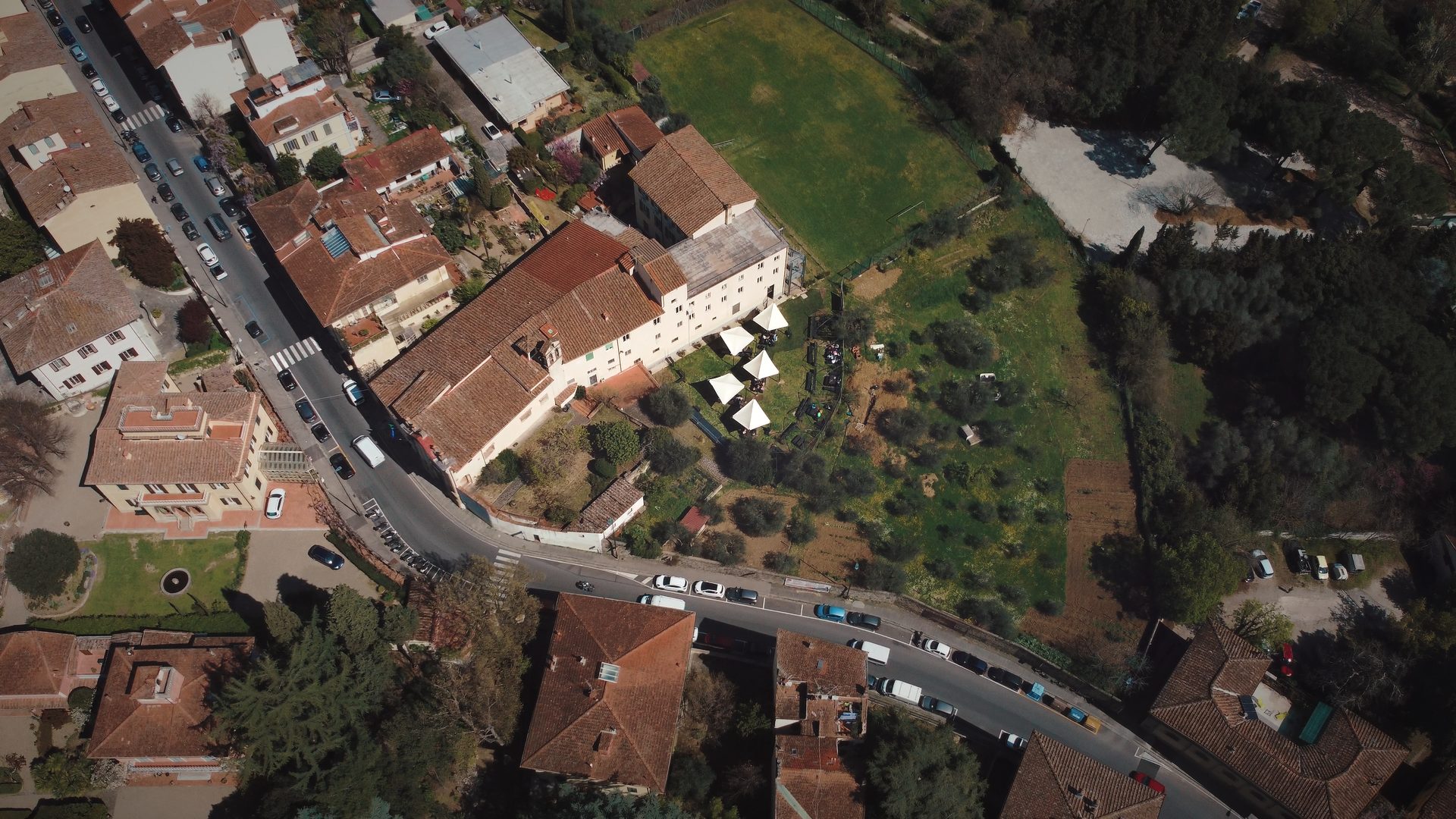
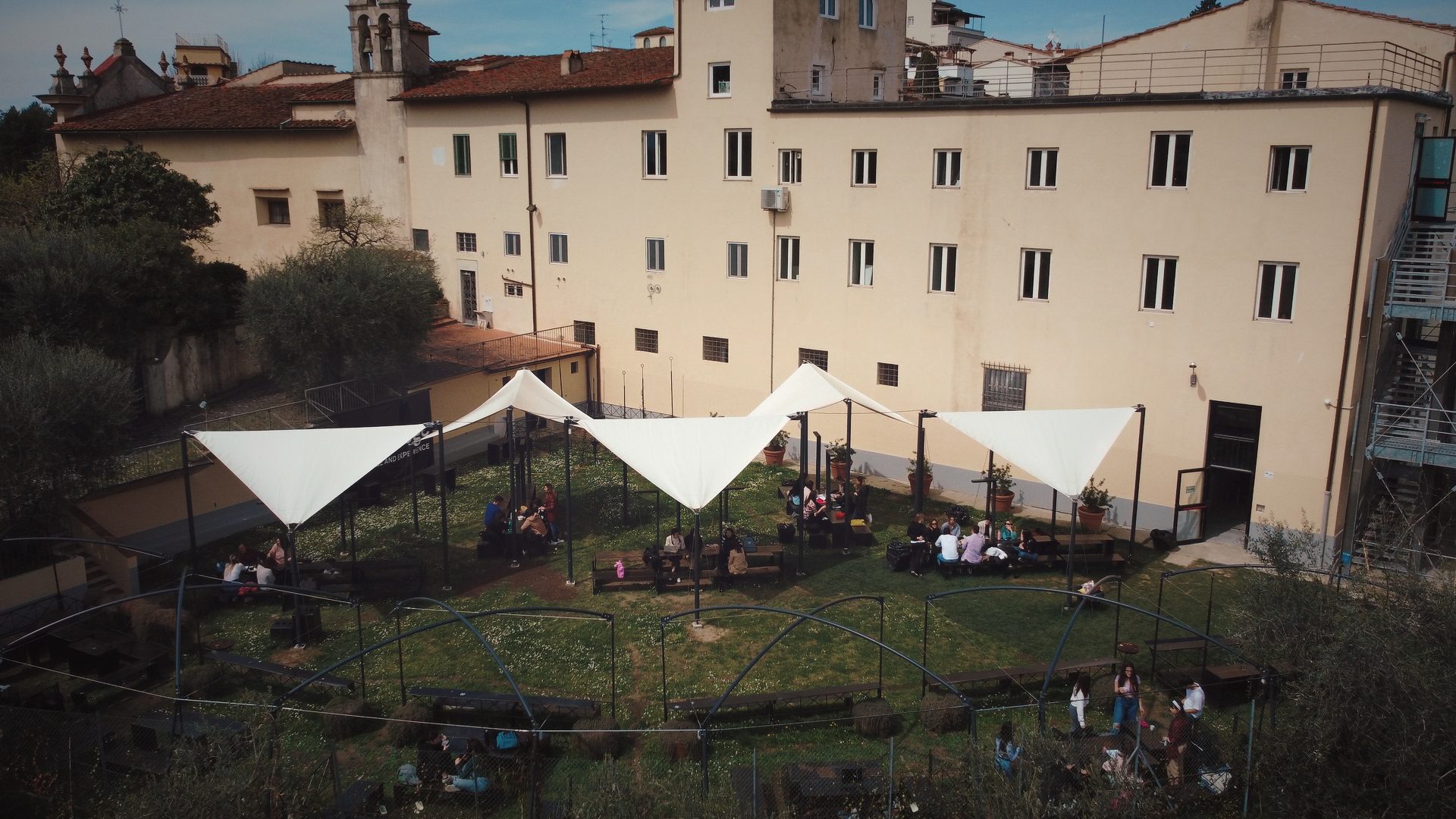
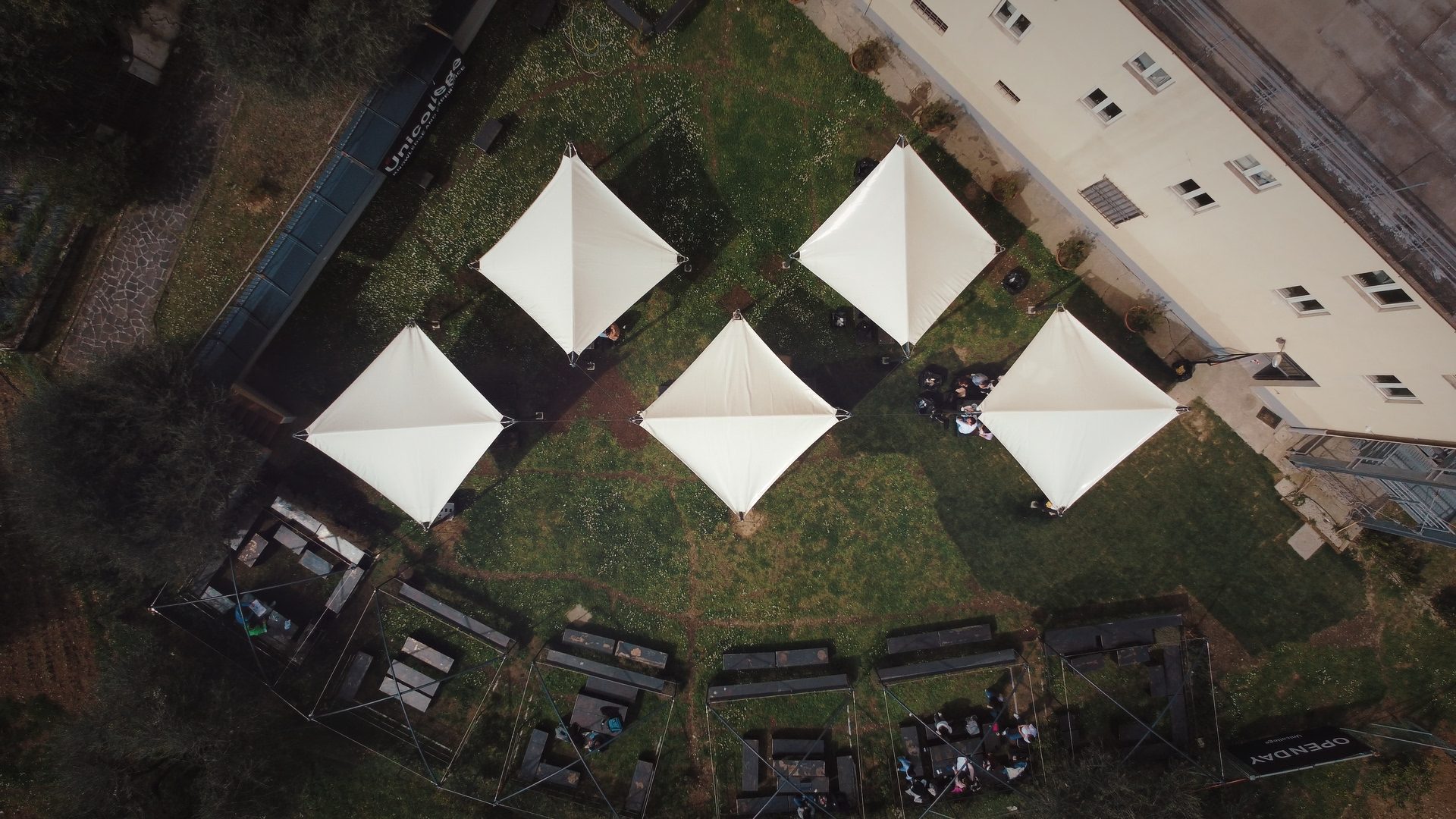
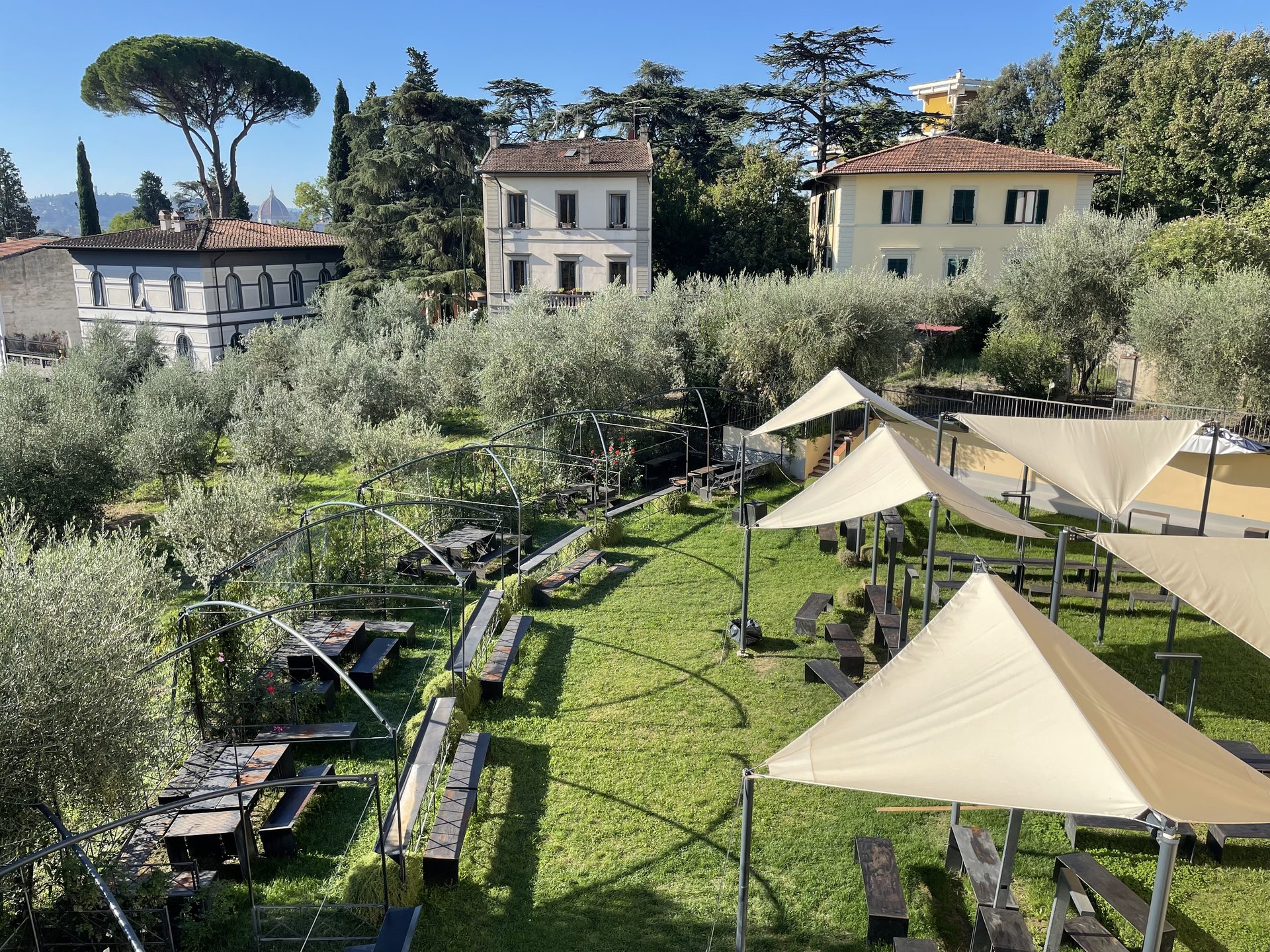
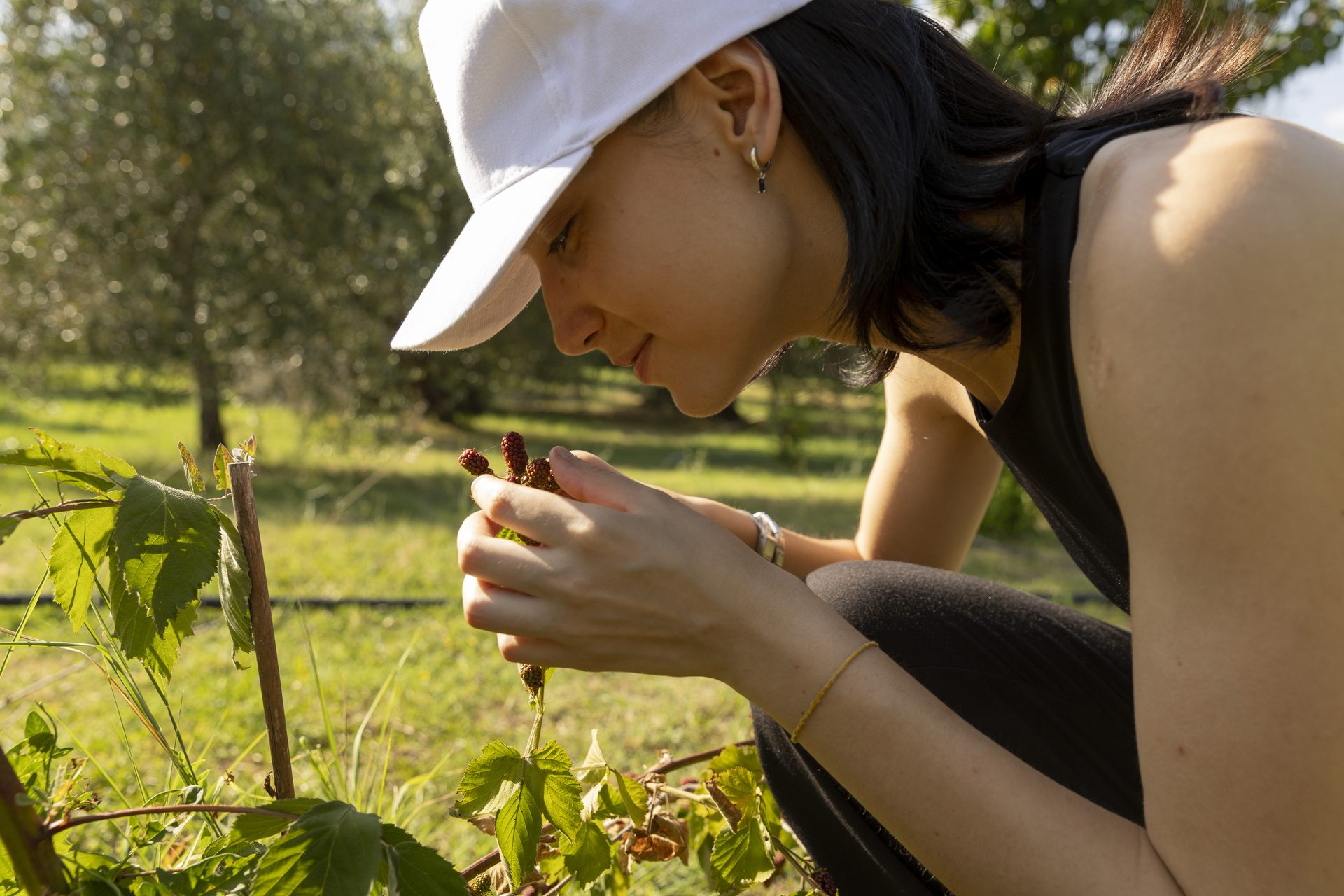
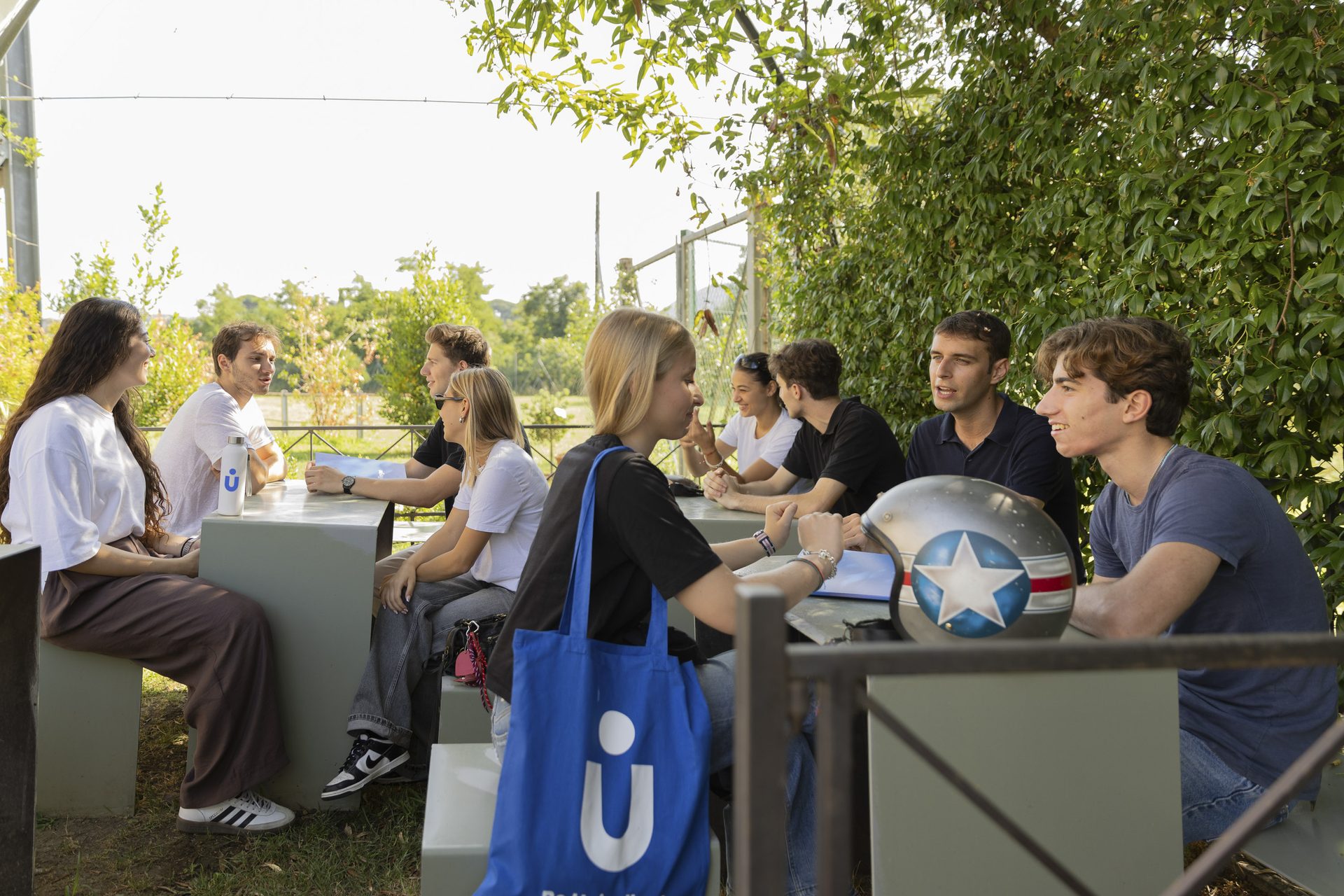
Step outside the historic buildings and the campus changes character. Behind them stretch more than 8,000 square meters of green space, with gardens, mature trees, olive groves, outdoor seating, and a sports field occupying the hillside above Florence.
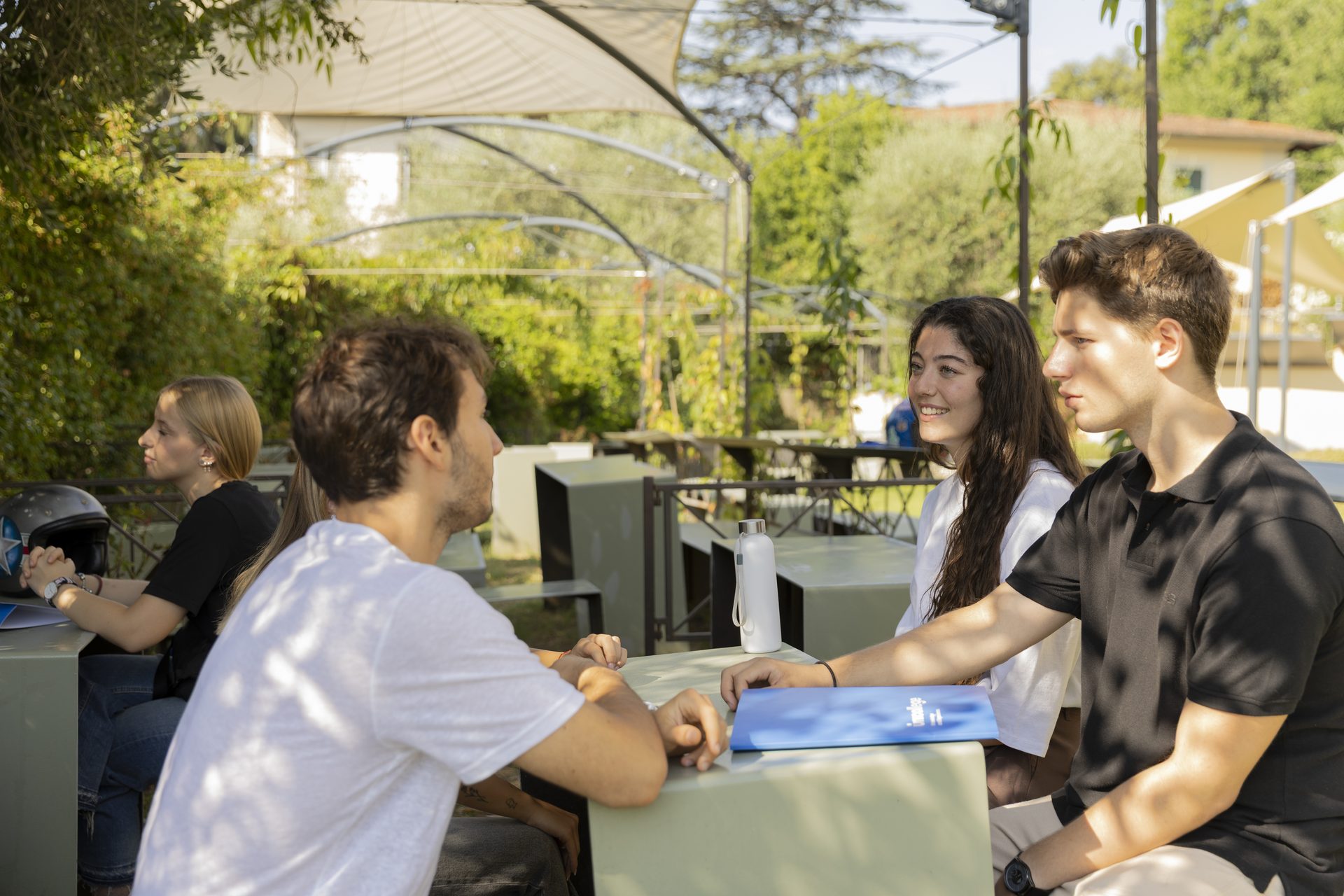
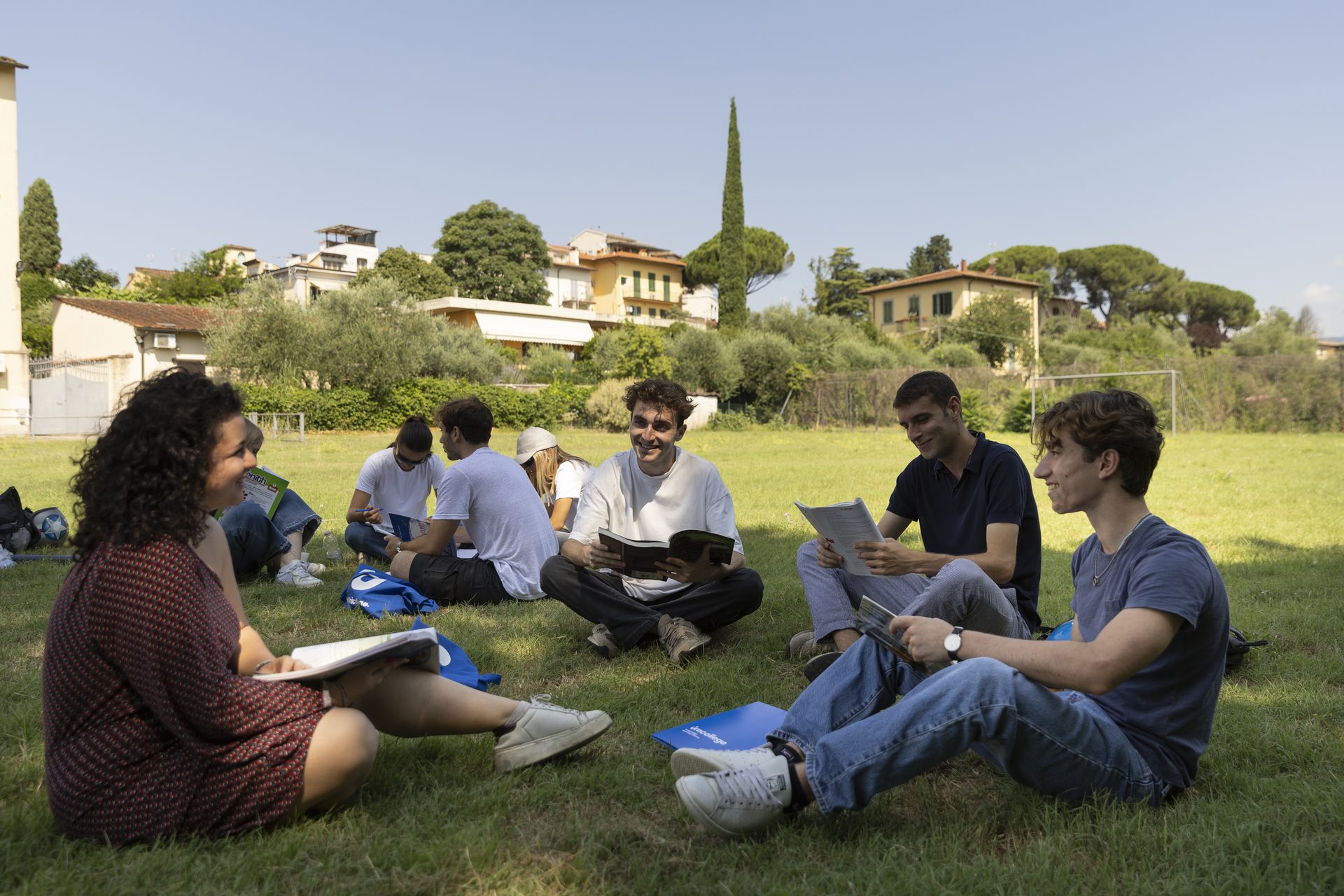
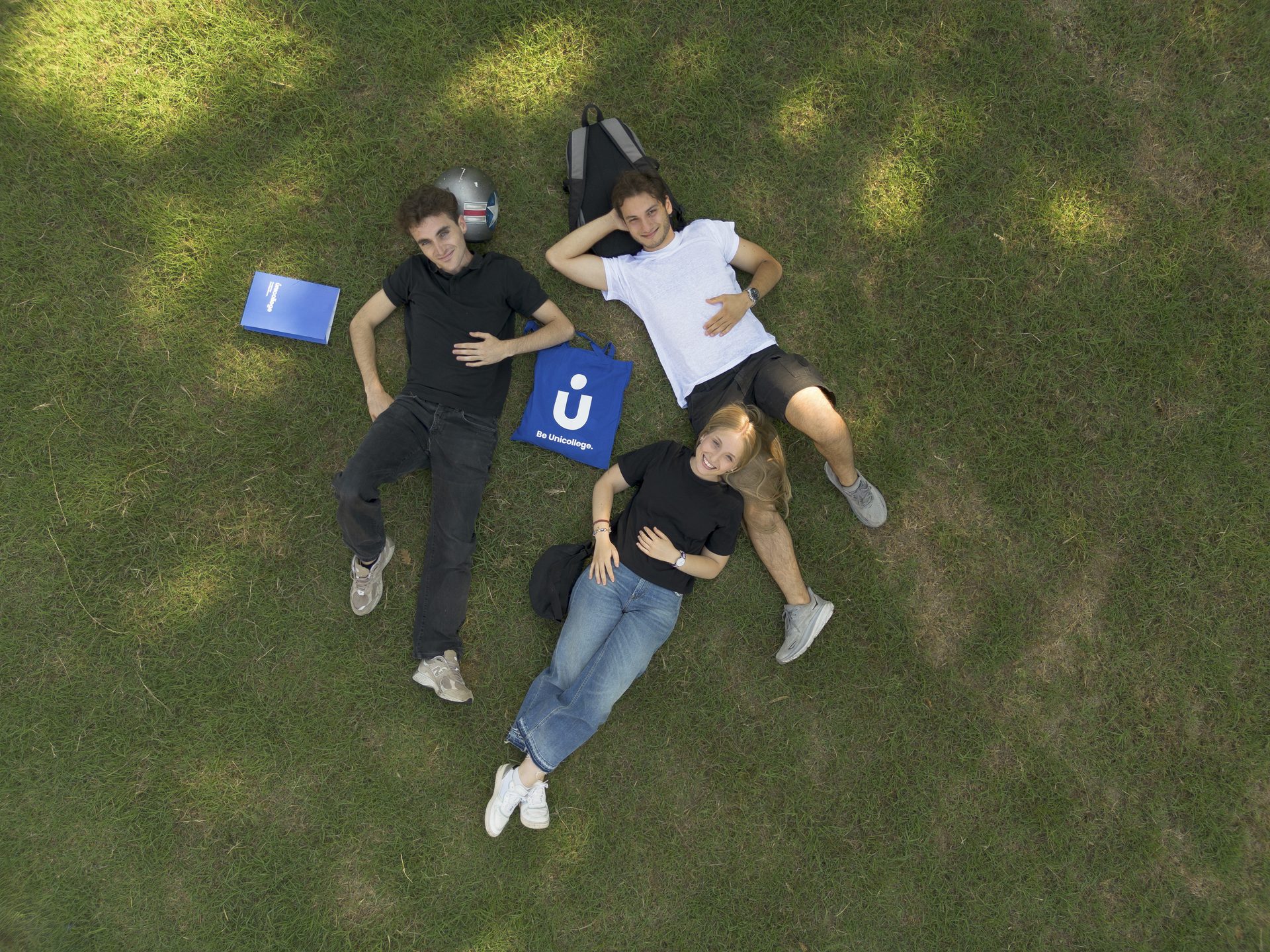
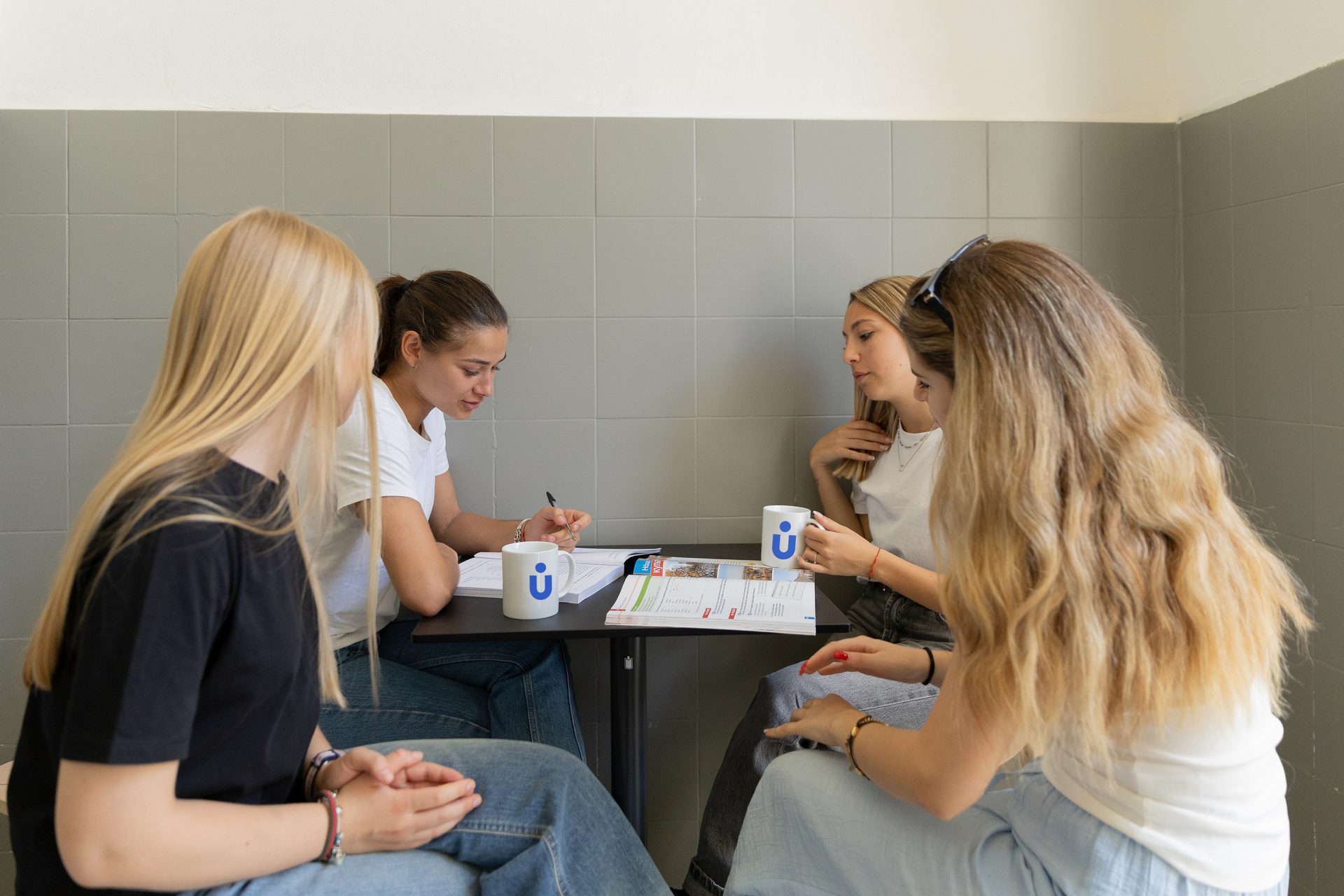
They are not ornamental grounds. They are part of daily university life. Students bring books outside between classes, have lunch under the trees, work together on presentations, meet friends, or simply spend an hour away from the classroom.
During the warmer months, much of the informal life of the university moves outdoors. That balance is unusual for Florence: a substantial green campus only minutes from the historic center.

Unicafè and Life Between Classes
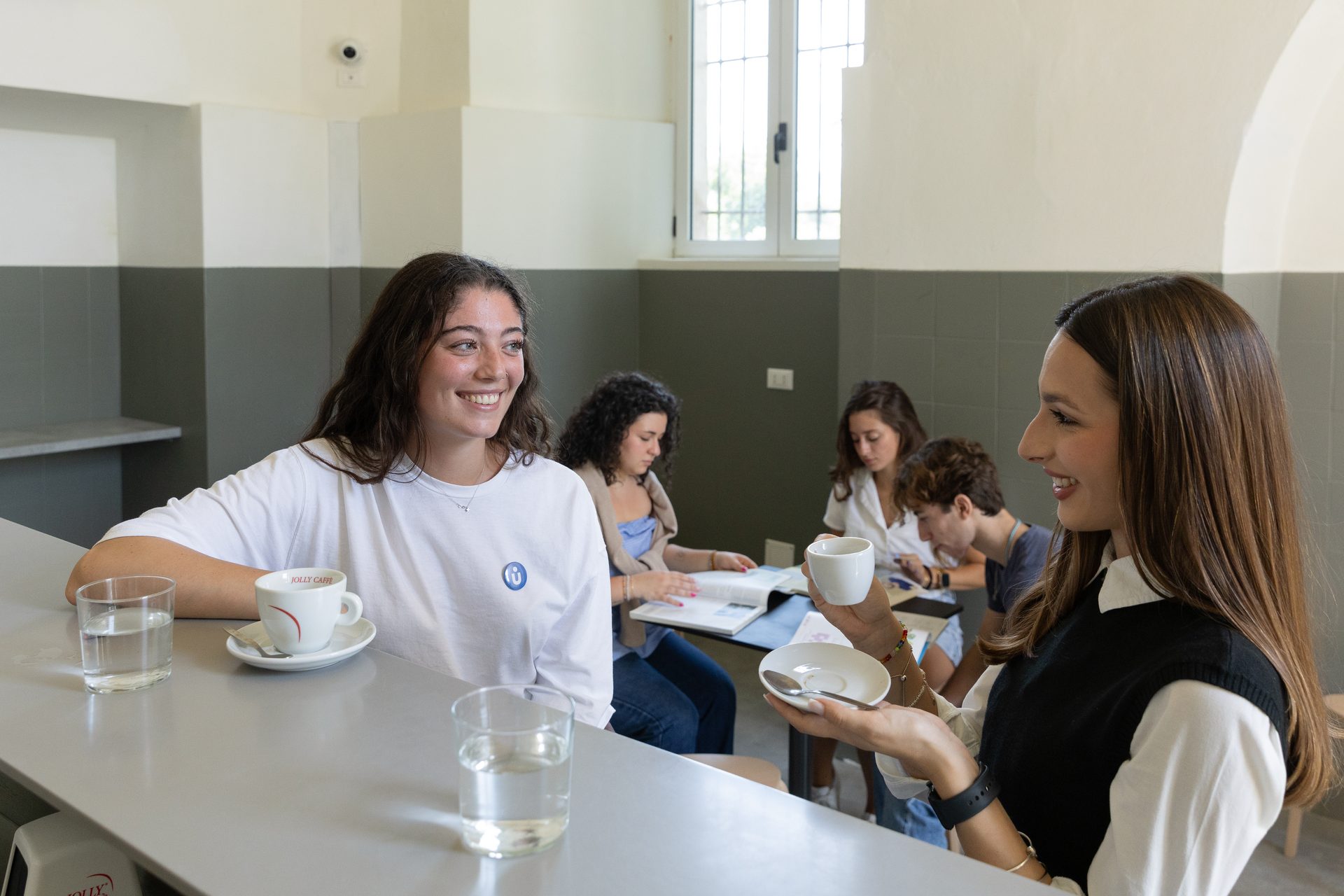
Some of university life happens in classrooms. Much of it happens between them. Unicafè, on the ground floor of the Headquarters, is where those two worlds meet.
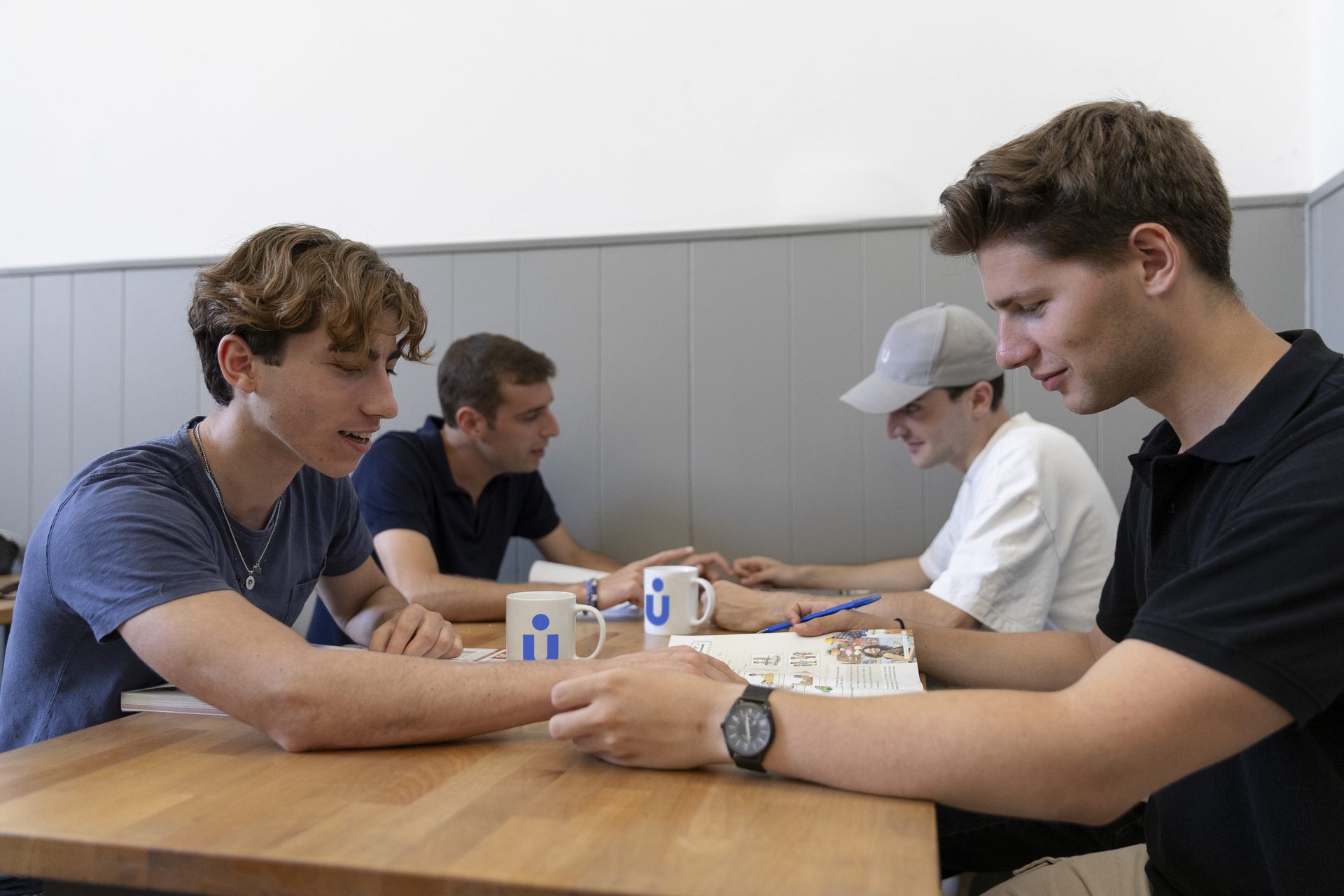
Students stop for an espresso before class, stay for lunch afterward, continue conversations with classmates, meet visiting students from abroad, or take their coffee into the gardens. The pace is recognizably Florentine. Academic life is not sealed away from meals, conversation, or the rhythms of the day.
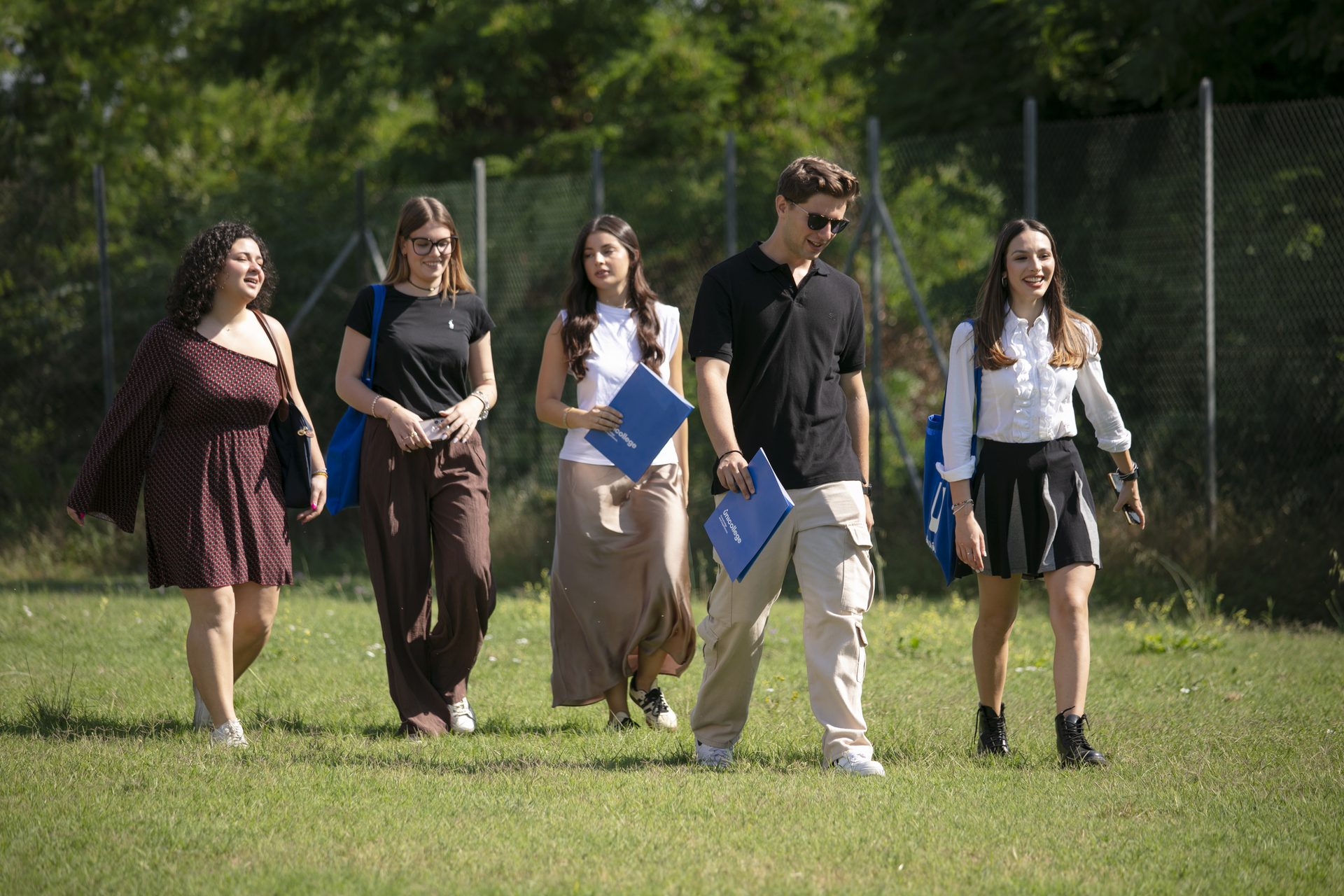
A student might begin the morning in an interpreting lab, attend a lecture in a frescoed room, have lunch with classmates, study outside beneath the olive trees, and walk into central Florence later that afternoon. There is no hard boundary between campus life and city life.
Living on Campus
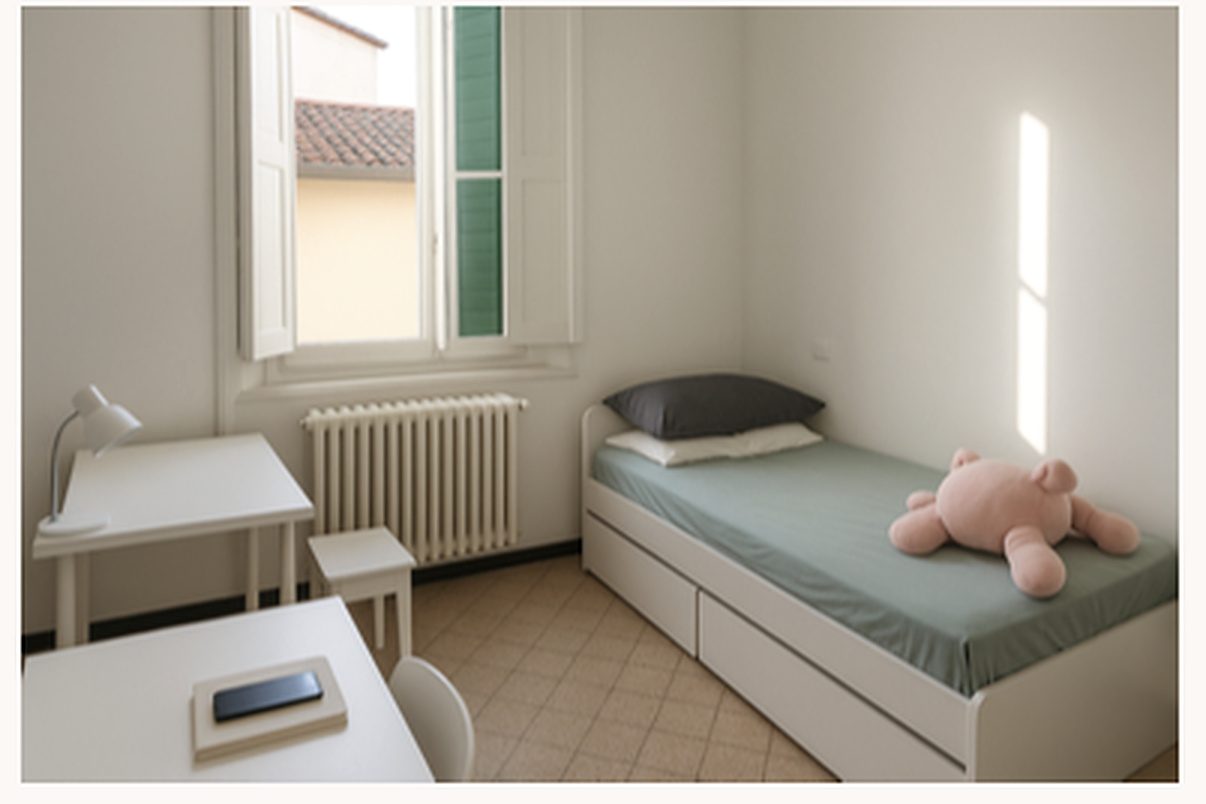
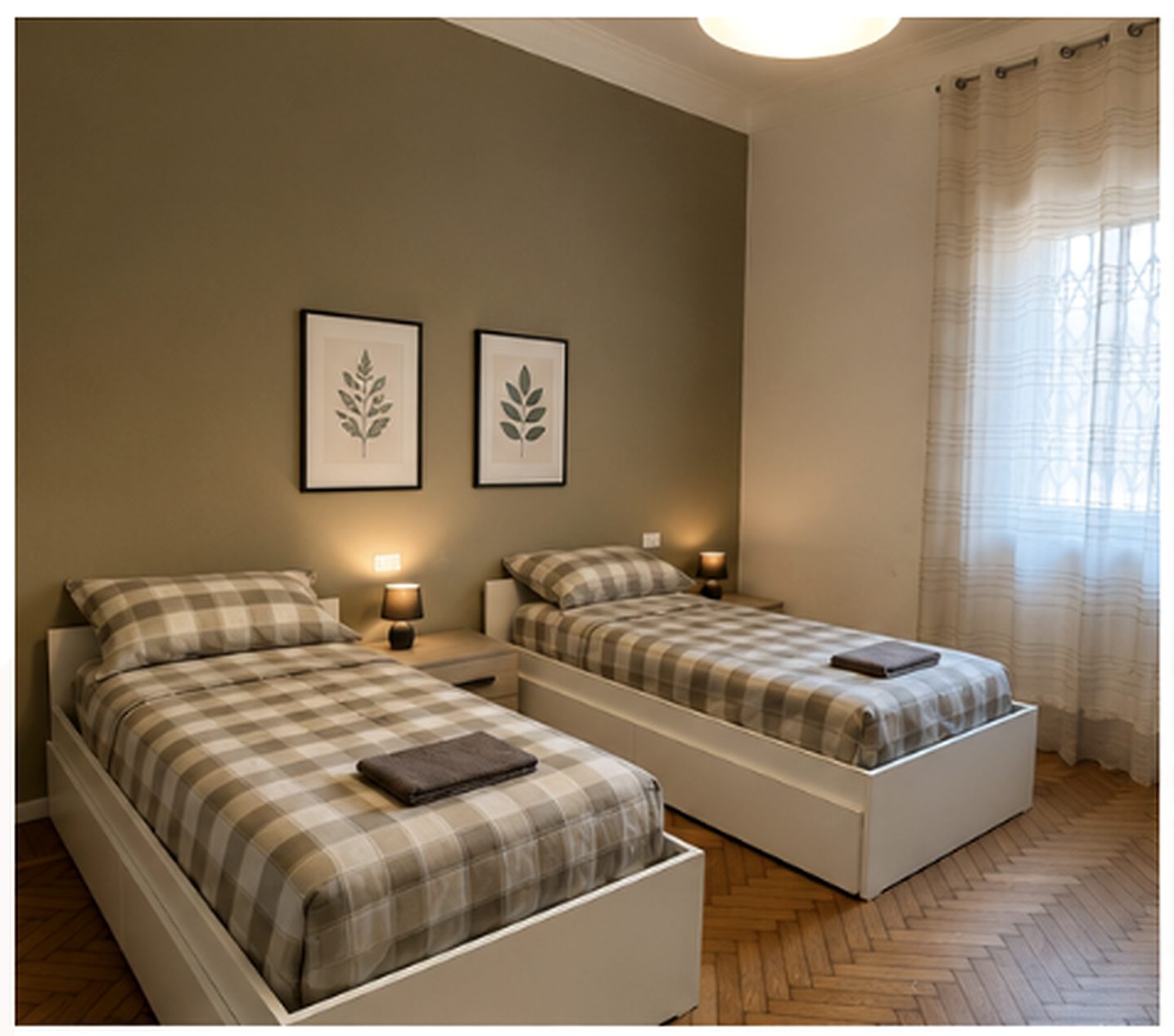
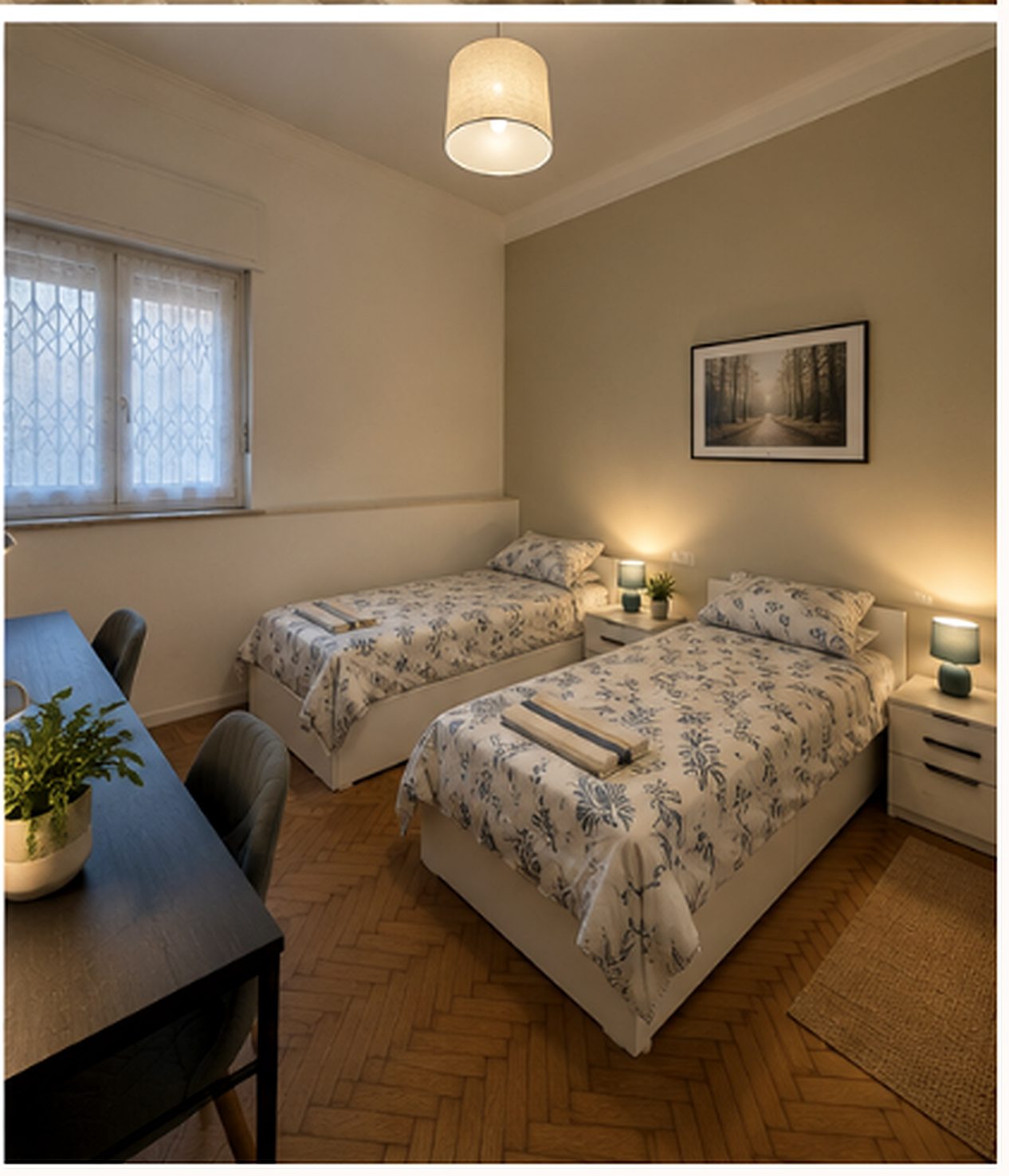
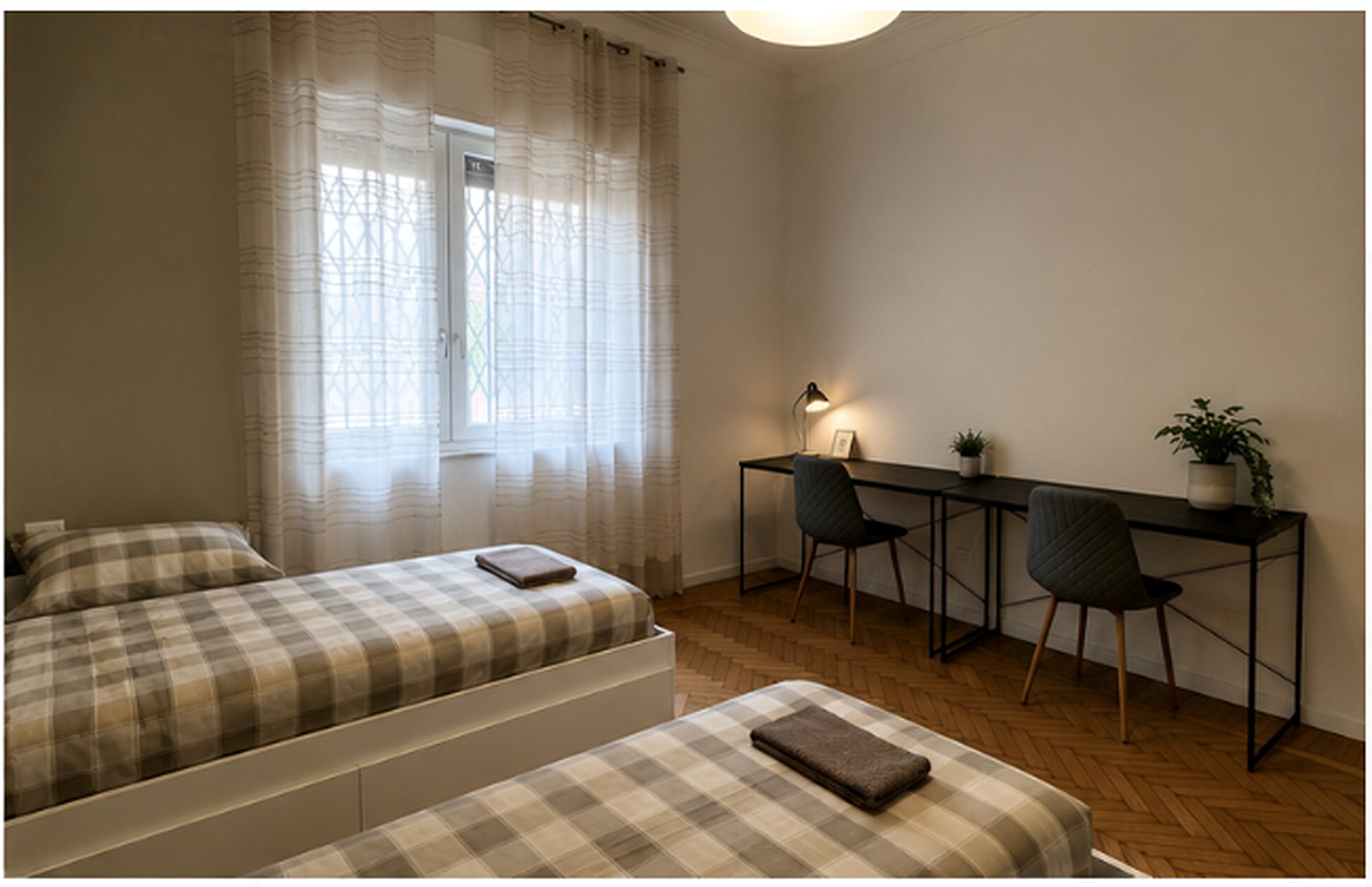
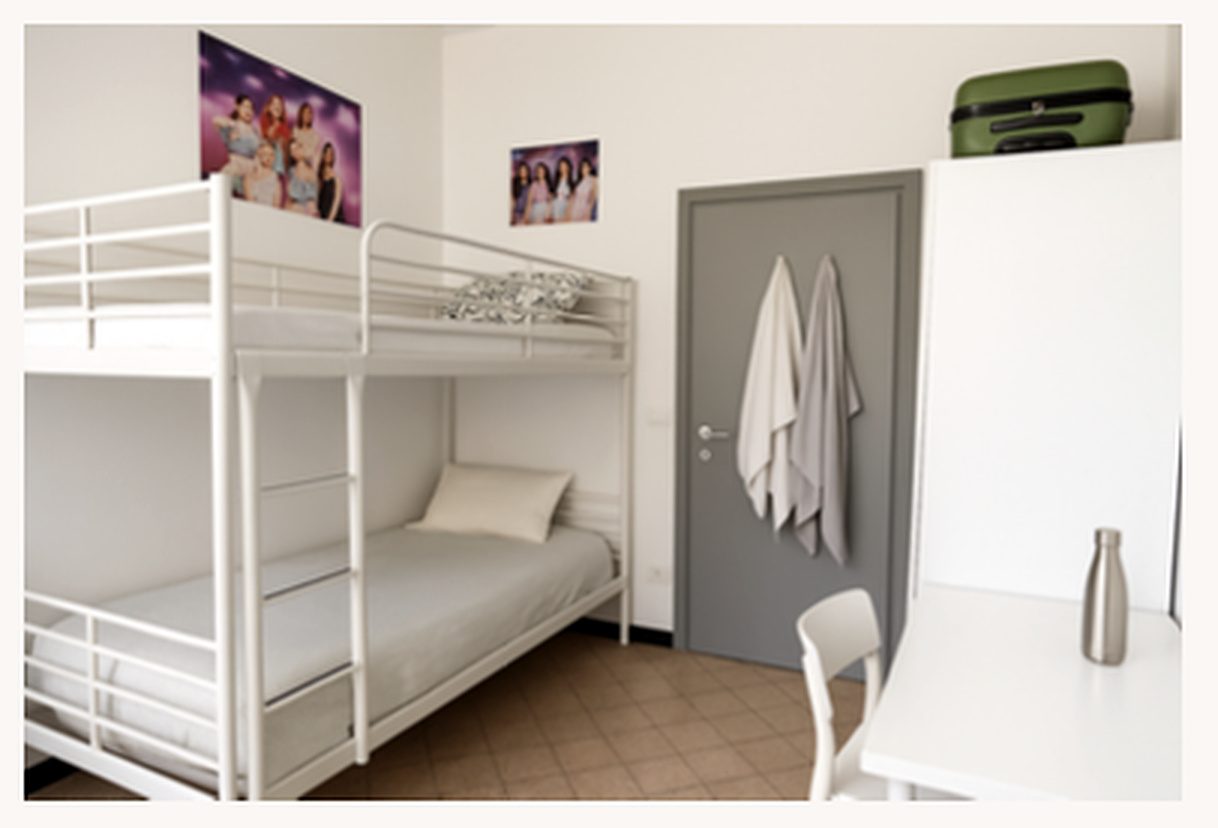
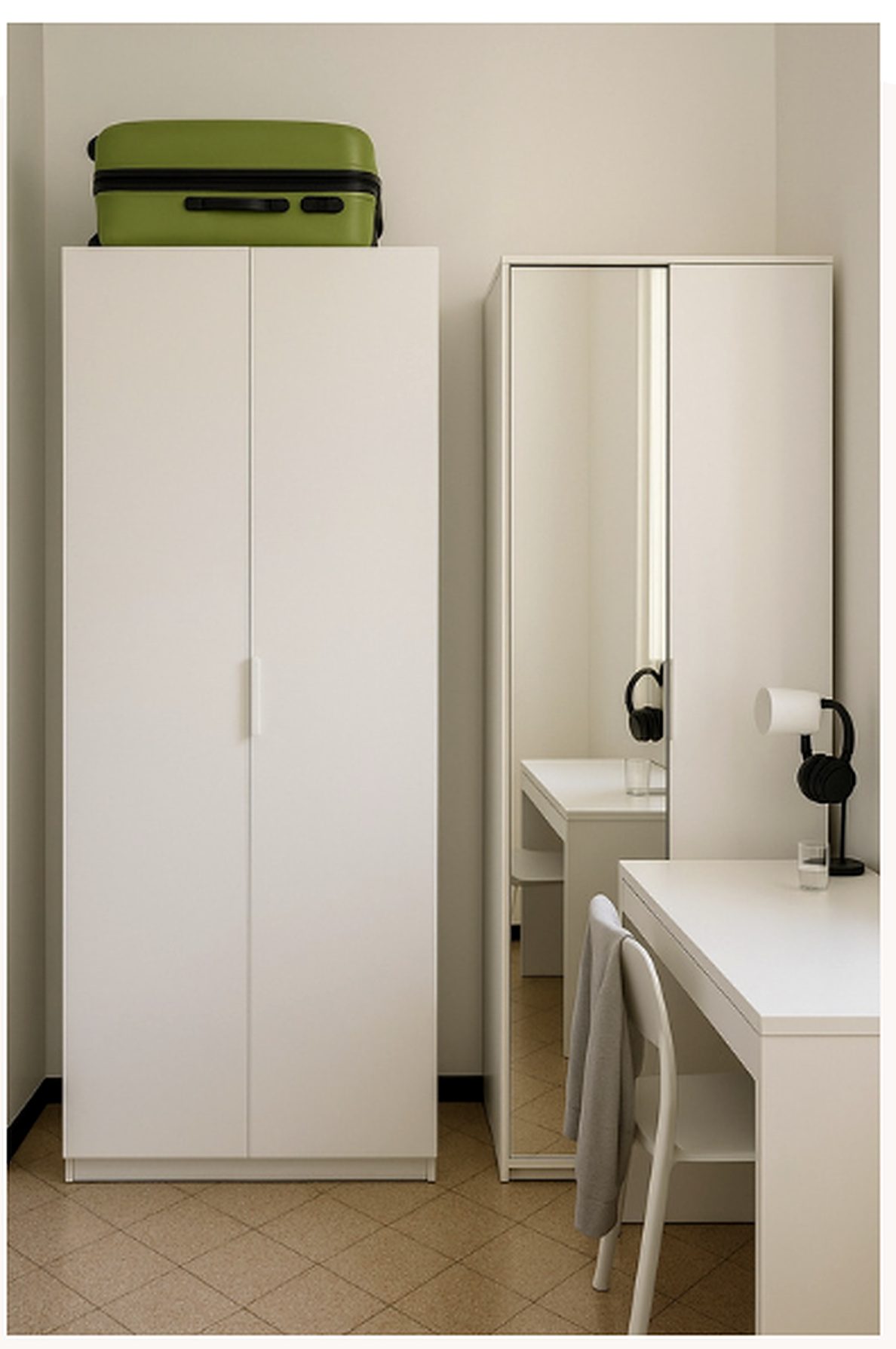
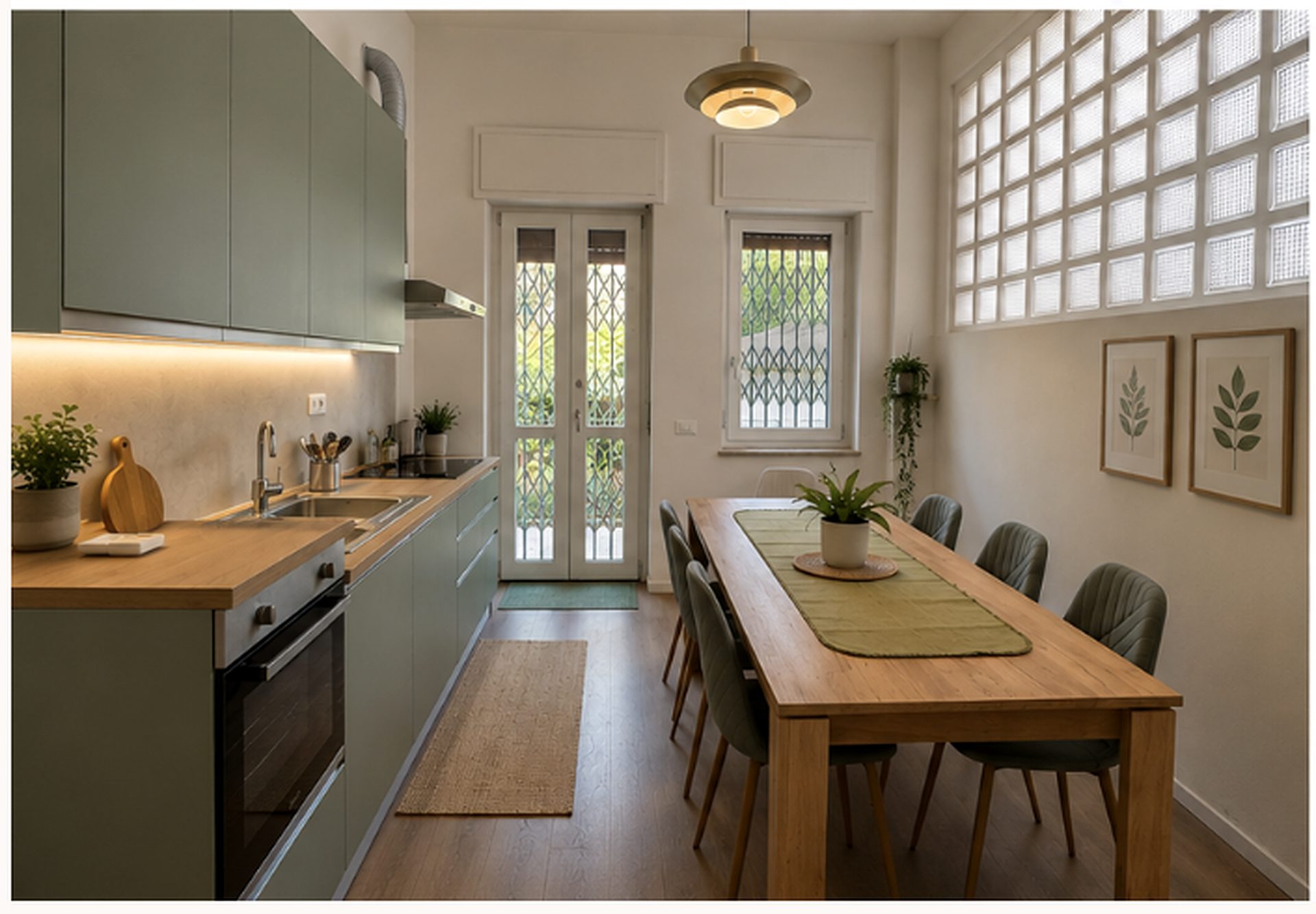
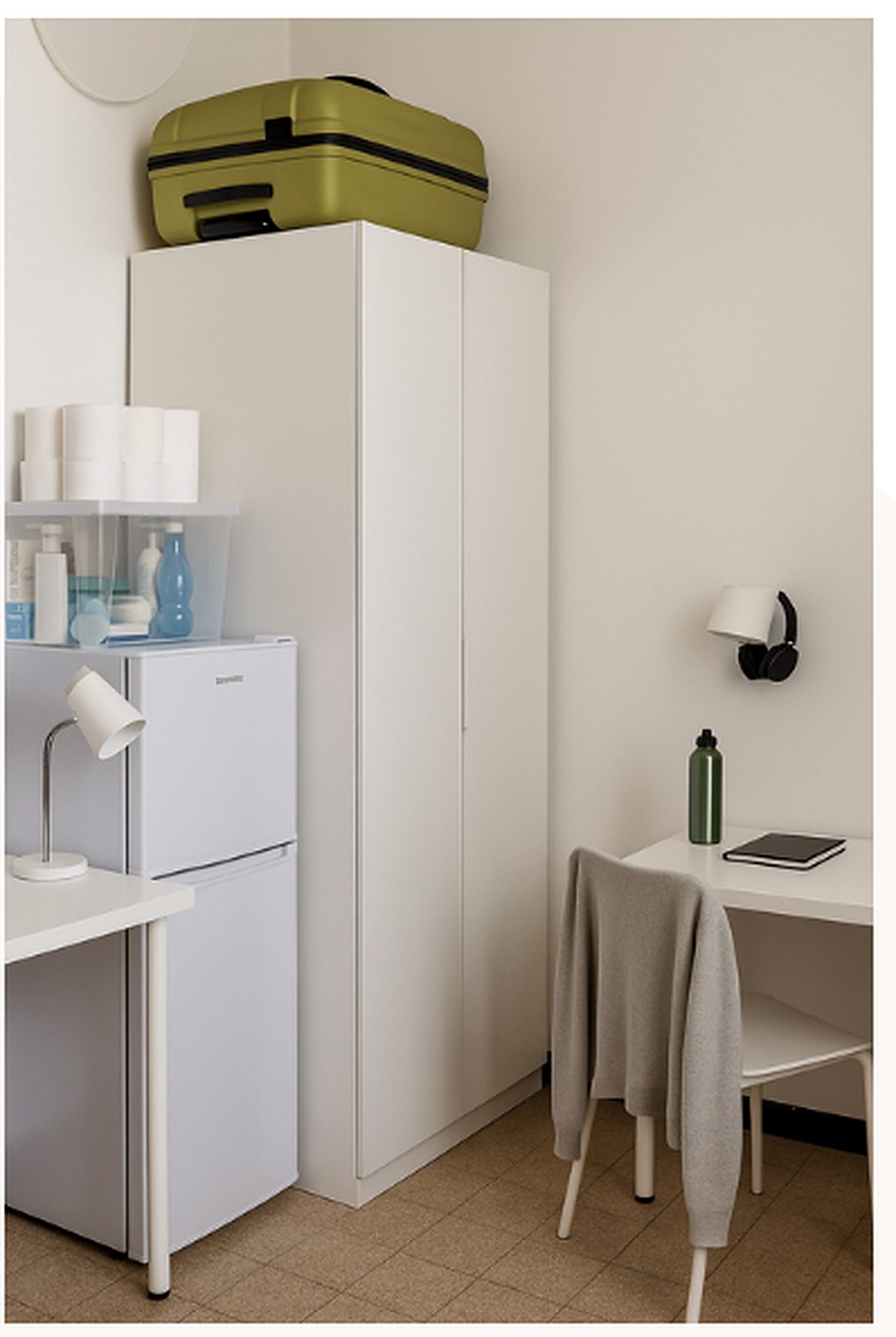
Florence is also one of Unicollege's residential campuses. The university residence forms part of the same academic complex, allowing approximately 55 students to live within the Headquarters itself.
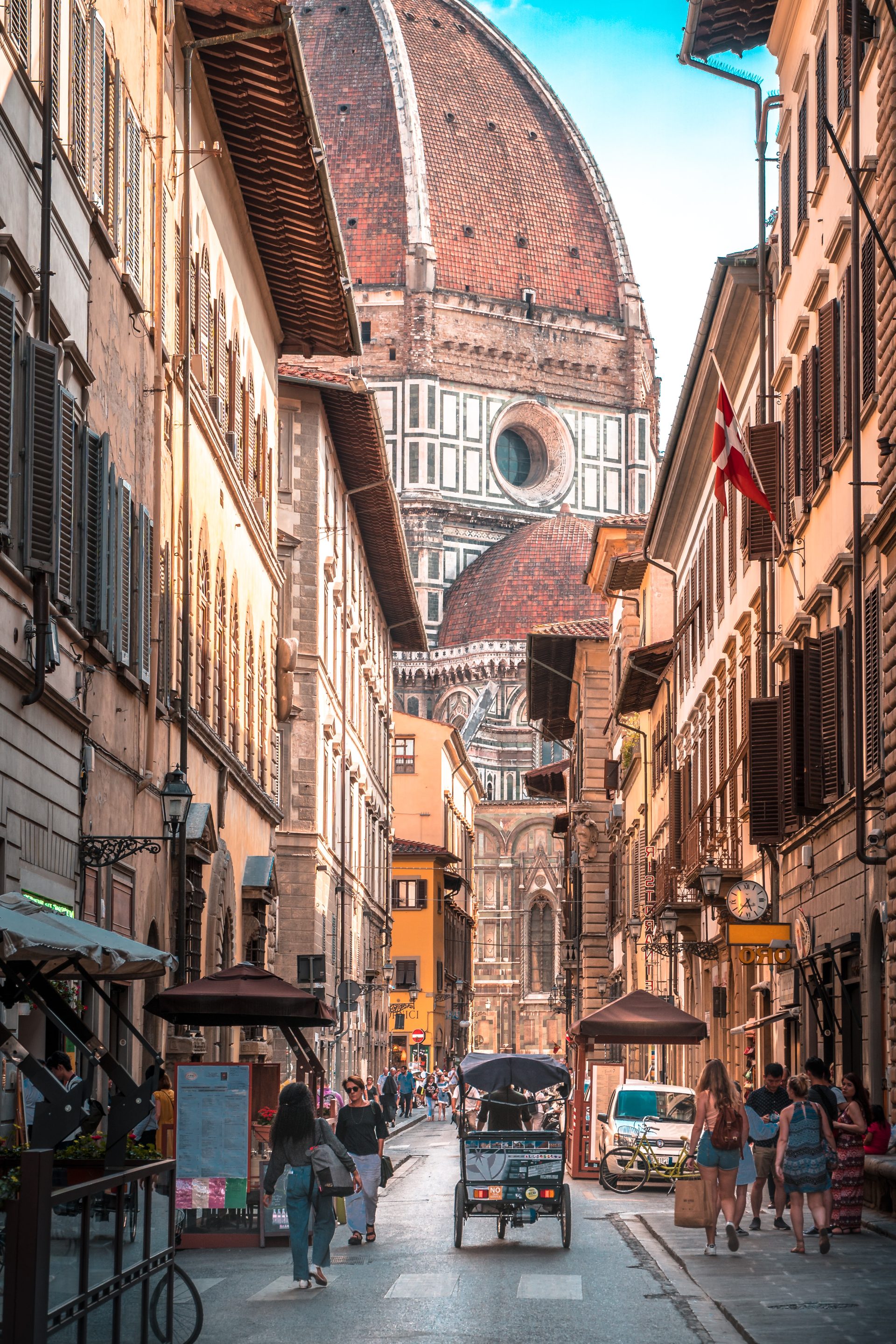
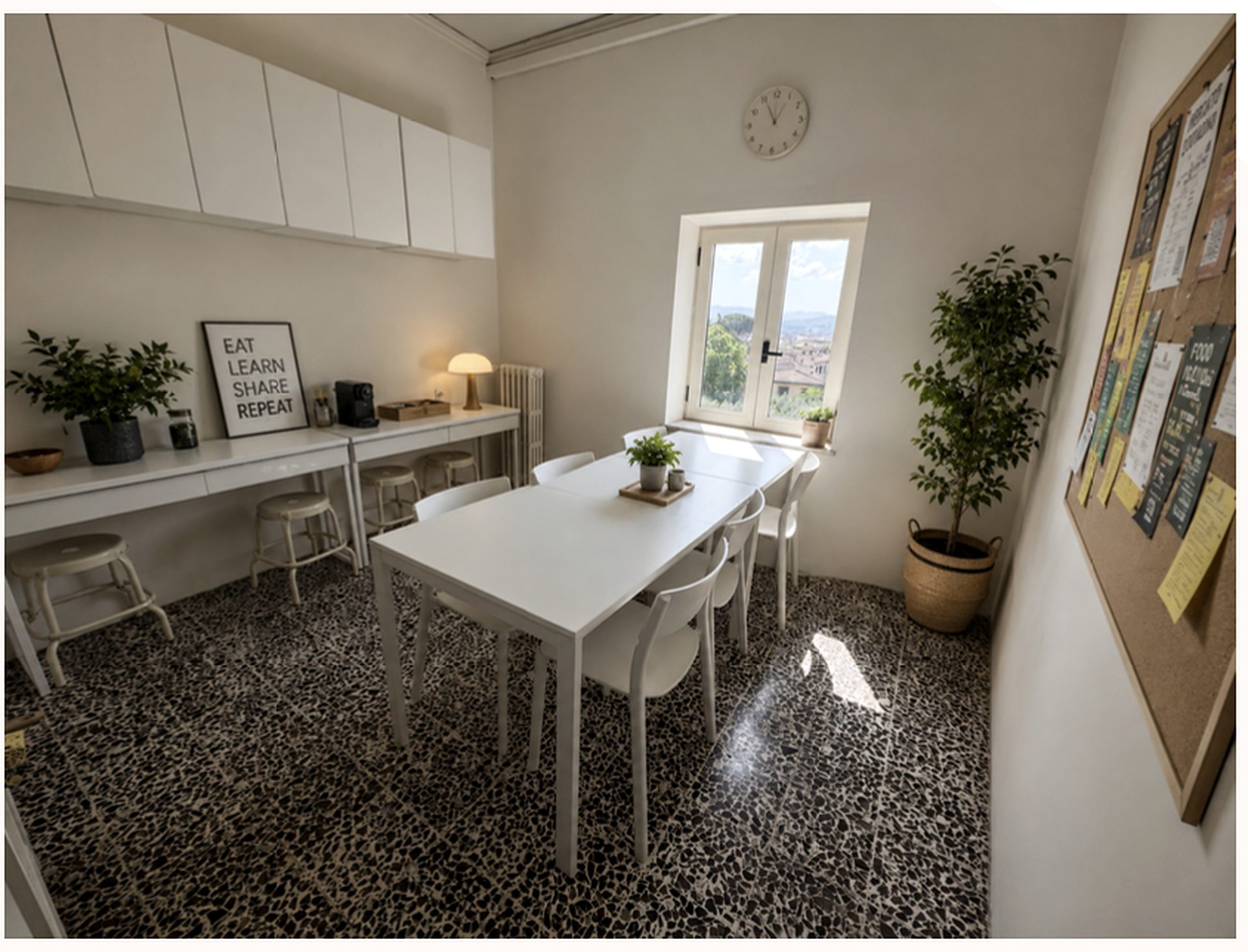
Different room and studio configurations are complemented by shared kitchens, dining areas, laundry facilities, and communal spaces. Some rooms face the campus gardens; from parts of the complex, the skyline of Florence appears beyond the hillside, including the unmistakable dome of Santa Maria del Fiore.
For international students, particularly those arriving in Italy for the first time, this creates a very different beginning to the semester. Classes, friends, university staff, meals, academic support, and accommodation all belong to the same environment. The residence is therefore not an annex to university life. It is part of it.
An International Campus
Florence Headquarters is the principal meeting point of Unicollege's international community. Students and faculty arrive throughout the year through semester study abroad, university exchange, faculty-led programs, visiting appointments, language programs, and institutional partnerships.
Unicollege's network spans more than 90 partner universities in over 40 countries, creating a campus in which international mobility is part of ordinary academic life rather than a separate activity. English is widely used across international programs, while the University's emphasis on languages means that several others can be heard throughout the building on any given day.
Italian degree-seeking students study alongside visiting international students. Faculty arrive from partner universities. Students leave Florence for exchange programs of their own and return with different academic experiences. The result is international without being detached from Italy. International students do not study in a foreign enclave in Florence. They enter an Italian university environment that is itself outward-looking and internationally connected.
On Via Bolognese
The location explains much of the character of the campus. Via Bolognese is one of Florence's historic northern approaches, climbing gradually from the city toward the villas, gardens, and wooded hills of Tuscany.
Unicollege sits precisely at that threshold. Below the campus, Florence becomes increasingly dense: the Giardino dell'Orticoltura, Piazza della Libertà, San Marco, and eventually the medieval and Renaissance center.
Above it, the character changes. Streets become greener, historic villas appear behind walls and gardens, and the city begins to give way to the Tuscan hills. It has long been one of Florence's most distinguished residential and institutional areas. A few minutes farther along Via Bolognese stands Villa La Pietra, home to NYU Florence, placing Unicollege within a small but significant academic corridor on the northern edge of the city.
Immediately below the university are the Giardino dell'Orticoltura and Orti del Parnaso, overlooking Florence. The garden's nineteenth-century iron-and-glass Tepidarium is itself a reminder that even the neighborhood around the campus carries layers of Florentine history. The Headquarters feels removed enough from the crowds to have a campus identity of its own. And yet Florence begins almost immediately outside its gates.
Florence as the Classroom
Florence hardly needs to be turned into a classroom. It already is one. The city's historic center has been a UNESCO World Heritage Site since 1982, but its importance extends well beyond the concentration of famous monuments inside it. Florence is one of the places where European art, politics, finance, architecture, literature, craftsmanship, and intellectual history intersect with extraordinary density. For students, those subjects cease to be abstract surprisingly quickly.
A course in Renaissance culture can move from the classroom to the Uffizi. Political history can be read inside Palazzo Vecchio. Art history continues through the Accademia, Bargello, Palazzo Pitti, San Marco, and Museo dell'Opera del Duomo.
Architecture is encountered simply by walking: Brunelleschi, Alberti, medieval towers, Renaissance palaces, monastic complexes, nineteenth-century boulevards, and contemporary interventions occupy the same city. Literature leads to Dante. Political thought leads to Machiavelli. Patronage leads to the Medici. Religion, art, banking, diplomacy, and commerce continually overlap. In Florence, the distance between a primary source and the classroom can sometimes be measured in minutes.
What Student Life in Florence Feels Like
Florence is large enough to remain surprising and small enough to become familiar. Students quickly develop their own geography of the city. There are afternoons studying at the Biblioteca delle Oblate, evenings in Santo Spirito, mornings at Sant'Ambrogio, walks through San Niccolò, exhibitions at Palazzo Strozzi, and the inevitable climb toward Piazzale Michelangelo and San Miniato al Monte.
Closer to campus, students use the Giardino dell'Orticoltura and the Orti del Parnaso as extensions of the green spaces around the university. The city is highly walkable, and much of everyday Florence is experienced on foot: from campus toward San Marco, through the historic center, across the Arno, and into Oltrarno. Living here also changes the way students encounter Italian culture.
Ordering coffee becomes language practice. Grocery shopping introduces different rhythms and habits. A neighborhood bar becomes familiar. Museum visits stop being exceptional occasions. Piazza life, public transportation, markets, football, festivals, and ordinary conversations gradually become part of the semester. The educational value of Florence lies partly in precisely that repetition. Students do not simply see the city. They begin to know it.
A Campus Within Florence, Not Apart From It
Florence Headquarters operates on two scales. Inside Via Bolognese 52 is a complete university environment: historic and frescoed classrooms, contemporary laboratories, academic offices, student services, a front desk, auditorium, café, university residence, sports facilities, and more than 8,000 square meters of gardens and green space. Beyond its gates is Florence. The relationship between the two is what makes the campus distinctive.
A place that once received travelers approaching the city, later became a center of Piarist education, welcomed the newly established Faculty of Engineering of the University of Florence, and subsequently housed generations of Philosophy students is still doing what it has done, in different forms, for centuries. People come here to learn. Unicollege is simply the latest chapter.