

Overview
Program Description
The International Affairs & Diplomacy concentration forms part of the Bachelor’s Degree with Student-Designed Pathways, allowing students to combine advanced study in international affairs with proficiency in two or three foreign languages selected from a portfolio of ten. This integrated model reflects the realities of modern diplomacy and global governance, where international organizations, governments, multinational institutions, and NGOs increasingly seek professionals capable of navigating complex geopolitical challenges while communicating across cultures, legal systems, and languages.
The concentration examines the dynamics of international relations, diplomacy, global governance, international law, security, and negotiation through an interdisciplinary curriculum combining political science, diplomatic history, global security studies, intelligence, and foreign policy analysis. Students develop the analytical, strategic, and intercultural competencies required to interpret geopolitical developments, evaluate international policy, and understand the interaction between state and non-state actors. The curriculum also explores contemporary challenges including terrorism, transnational security, cyber diplomacy, intelligence, international conflict, and the evolving architecture of global cooperation.
By combining specialized expertise in international affairs with multilingual proficiency, students graduate with a distinctive academic profile prepared for careers in diplomacy, international organizations, government institutions, multinational corporations, think tanks, NGOs, and postgraduate study. Graduates develop the ability to negotiate, communicate, and operate confidently across cultures, institutions, and international environments - essential competencies for leadership in an increasingly interconnected world.
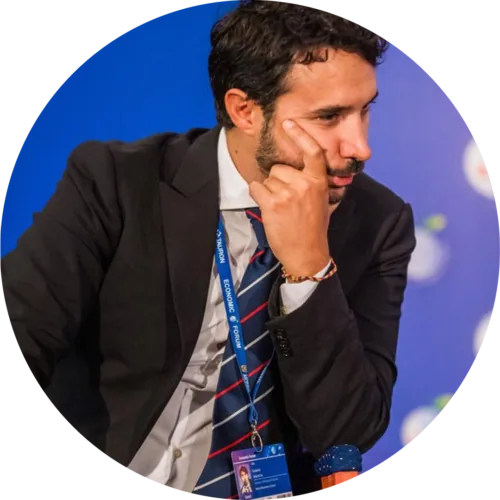
“Geopolitics teaches us to see how power moves across borders and shapes global realities. In my courses, students develop the analytical and strategic tools needed to understand international dynamics, anticipate change, and interpret the forces driving today’s complex world.” - Prof. Valerio Mancini, EdD c. Westcliff University · MA Economic Security, Geopolitics & Intelligence · MA International Affairs & European Integration
Learning Model & Experience
All courses within the International Affairs & Diplomacy program at Unicollege are structured according to the patented 3A (Acquire, Apply, Amplify) 70–20–10 academic model, which organizes learning into three progressive phases: instruction (70%), applied capstone work (20%), and field study (10%). This model is designed to ensure that theoretical knowledge, policy analysis, and professional exposure are systematically integrated throughout the academic pathway.
A representative example of this structure is the course Security, Intelligence, and Terrorism, which explores the strategies, institutions, and analytical frameworks used to understand and address contemporary security threats. During the Acquire phase, students are introduced to key concepts in intelligence studies, counterterrorism, and international security, including threat assessment, intelligence gathering, risk analysis, and the role of state and international actors, through guided instruction and case-based analysis. The Apply phase consists of a mandatory capstone project in which students examine real or simulated security scenarios, applying analytical tools from international relations and intelligence studies to evaluate threats, policy responses, and cooperation mechanisms. The course concludes with the Amplify phase, a field study conducted in collaboration with institutional or professional contexts, allowing students to observe and engage with contemporary practices in security, intelligence, and counterterrorism within national and international frameworks.
Curriculum
International and Diplomatic Law6 ECTS / 3 US Credits
This course offers a comprehensive study of the legal frameworks governing relations among states, international organizations, and global actors. Students will examine the sources of international law, state sovereignty, treaty-making, diplomatic privileges and immunities, and the mechanisms for peaceful dispute resolution. Emphasis is placed on the interaction between legal norms and political realities, exploring how international law shapes diplomacy, conflict management, and global cooperation. Through case studies, landmark decisions, and simulations, students will develop the analytical tools necessary to interpret complex legal issues and evaluate the role of law in contemporary international affairs.
International Relations and Global Governance6 ECTS / 3 US Credits
This course provides an in-depth exploration of the theoretical foundations and institutional structures that shape international relations and global governance. Students will examine major IR theories, the evolution of the international system, and the role of global institutions in addressing security, economic, environmental, and humanitarian challenges. Key topics include multilateralism, global leadership, international regimes, and the growing influence of non-state actors. Through analytical debates and applied research, students will develop the capacity to assess global governance mechanisms and understand their impact on international stability and cooperation.
Applied Geopolitical Analysis6 ECTS / 3 US Credits
This course focuses on the applied study of geopolitical dynamics and their influence on
global power relations, territorial disputes, and strategic decision-making. Students will analyze how geography, resources, demographics, and cultural factors shape the political behavior of states and regions. Emphasis is placed on contemporary geopolitical hotspots, scenario analysis, and strategic forecasting. Through case studies, map- based exercises, and policy simulations, students will develop practical analytical skills to interpret geopolitical trends and assess their implications for diplomacy, security, and international strategy.
History of International and Diplomatic Relations6 ECTS / 3 US Credits
This course traces the historical evolution
of the international system, examining key diplomatic episodes, shifting alliances, and
major transformations from early statecraft to modern global diplomacy. Students will explore the development of foreign policy practices, the impact of revolutions and world wars, decolonization processes, and the emergence of international organizations. Emphasis is placed on understanding how historical contexts inform contemporary diplomatic challenges. Through primary-source analysis and historical case studies, students will acquire a solid foundation for interpreting current international dynamics through a long-term, historically grounded perspective.
Diplomatic Theory and Practice6 ECTS / 3 US Credits
This course explores both the conceptual foundations and practical dimensions of diplomacy in contemporary international affairs. Students will study negotiation techniques, diplomatic protocol, mediation practices, strategic communication, and crisis diplomacy. The curriculum also examines the role of embassies, consular services, multilateral diplomacy, and the increasing relevance of public diplomacy. Through simulations, scenario-based exercises, and analysis of real diplomatic cases, students will develop practical competencies in negotiation, representation, and strategic decision- making essential for diplomatic and international careers.
Economics of Global Markets6 ECTS / 3 US Credits
This course provides an analytical overview of
the economic forces shaping global markets and international business environments. Students will examine trade dynamics, comparative advantage, financial systems, market integration, and the impact of political and technological change on global economic activity. Emphasis is placed on understanding how firms navigate opportunities and risks within interconnected economies. Through the study of economic models, policy debates, and real-world case analyses, students will develop the tools to interpret global trends, evaluate strategic decisions, and assess the broader implications of international economic transformations.
Artificial Intelligence and Cybercrime6 ECTS / 3 US Credits
This course investigates the evolving relationship between artificial intelligence, digital technologies, and cyber-enabled crime. Students will analyze contemporary forms of cybercrime - including identity theft, digital fraud, hacking, and AI-driven exploitation - while exploring the technological infrastructures that enable them. The curriculum emphasizes risk assessment, cybersecurity strategies, digital forensics, and the regulatory challenges posed by autonomous systems and algorithmic threats. Through applied projects and scenario-based exercises, students will acquire practical skills to understand, detect, and mitigate cyber risks in an increasingly interconnected world.
Crisis Management in International Relations6 ECTS / 3 US Credits
This course provides an in-depth study of how states, international organizations, and non-state actors prepare for, respond to, and manage international crises. Students will examine crisis typologies - including geopolitical confrontations, humanitarian emergencies, financial shocks, and hybrid threats - and the strategic and institutional mechanisms used to address them. Key themes include early warning systems, negotiation under pressure, resource coordination, communication strategies, and the role of leadership in high-risk environments. Through simulations, case studies, and analytical exercises, students will develop practical skills for evaluating crises, designing response strategies, and understanding the political and ethical complexities of decision-making during periods of instability.
Human Rights and Peace Studies6 ECTS / 3 US Credits
This course explores the legal, political, and
ethical foundations of human rights and their
role in promoting peace, justice, and global
security. Students will examine international
human rights instruments, peacebuilding theories, conflict transformation, transitional justice, and the operations of global institutions tasked with protecting human dignity. Emphasis is placed on analyzing contemporary human rights challenges - such as displacement, discrimination, gender-based violence, and digital rights violations - within broader peace-building frameworks. Through critical debates, case studies, and applied policy analyses, students will develop the analytical tools to assess human rights issues and contribute to sustainable peace initiatives in diverse contexts.
Sociology of Evil and Radicalization6 ECTS / 3 US Credits
This course examines the sociological dimensions of violence, moral transgression, and radicalization processes in contemporary societies. Students will explore how cultural narratives, group dynamics, identity formation, and ideological systems contribute to acts perceived as “evil,” from individual deviance to large-scale atrocities. Key topics include extremism, radicalization pathways, charismatic authority, propaganda, and the sociopolitical conditions that facilitate extremist movements. Through theoretical debates and case-based analysis, students will develop the tools to interpret complex forms of destructive behavior and analyze strategies for prevention, deradicalization, and social resilience.
Comparative Literatures and Contemporary Cultures6 ECTS / 3 US Credits
This course examines literary production and cultural expression from a comparative and contemporary perspective, exploring how texts, media, and cultural practices reflect and shape social, political, and historical realities. Students will analyze literary works, films, and cultural texts across different linguistic and cultural contexts, with particular attention to themes such as identity, migration, globalization, memory, and cultural exchange. Emphasis is placed on critical analysis, intercultural interpretation, and the relationship between literature and contemporary cultural debates. Through comparative analysis and critical writing, students will develop the ability to interpret cultural production within broader international and interdisciplinary frameworks.
Language, Communication, and Artificial Intelligence6 ECTS / 3 US Credits
This course explores the intersection between language, communication, and artificial intelligence, focusing on how emerging technologies are transforming linguistic practices, professional communication, and cultural production. Students will examine the role of AI in language processing, translation, content generation, discourse analysis, and digital communication environments. Emphasis is placed on the interaction between human and machine communication, ethical considerations, and the impact of artificial intelligence on professional sectors such as diplomacy, media, marketing, and legal communication. Through case studies, applied projects, and simulations, students will develop critical and practical skills to analyze, evaluate, and effectively use AI-driven communication tools in multilingual and multicultural contexts.
Security, Intelligence, and Terrorism6 ECTS / 3 US Credits
This course provides a comprehensive exploration of contemporary security challenges, intelligence practices, and the evolving landscape of terrorism. Students will examine the foundations of national and international security, the structure and functions of intelligence agencies, and the methodologies used to assess threats and prevent attacks. Key topics include counterterrorism strategies, risk analysis, radicalization pathways, and the geopolitical dimensions of global security. Through case studies, scenario-based discussions, and analysis of real-world intelligence failures and successes, students will develop critical skills in strategic thinking, threat evaluation, and policy assessment.
Restorative Justice6 ECTS / 3 US Credits
This course explores the principles, practices, and transformative potential of restorative justice within contemporary legal and community settings. Students will study restorative models that prioritize accountability, dialogue, and the
repair of harm, examining how these approaches differ from traditional punitive systems. Key themes include victim–offender mediation, community conferencing, reintegration practices, and the ethical foundations of restorative processes. Through case studies and experiential activities, students will develop the ability to evaluate restorative initiatives, understand their psychological and social impacts, and consider their application in criminal justice policy and conflict resolution.
Organized Crime and Transnational Mafias6 ECTS / 3 US Credits
This course offers an in-depth study of organized crime systems and the global networks that sustain transnational mafias. Students will investigate the historical evolution, organizational structures, and economic activities of major criminal groups, with attention to illicit markets, money laundering, corruption, and the infiltration of legal economies. The curriculum also explores state responses, international cooperation, and the challenges of combating criminal enterprises operating across borders. Through comparative case analyses and interdisciplinary perspectives, students will gain a nuanced understanding of how organized crime adapts to global dynamics and influences political, economic, and social systems.
Internship6 ECTS / 3 US Credits
The Internship consists of a professional placement carried out at the national or international level in an institution, organization, or company selected according to the student’s curriculum concentration. The internship is designed to provide practical experience in professional environments related to forensics, fashion, humanities, diplomacy, or criminology, allowing students to apply the knowledge and skills acquired during their studies in real-world contexts. Through supervised professional activities, students will develop organizational, communication, and problem-solving skills, as well as a deeper understanding of workplace dynamics in international and multicultural settings. The internship represents an integral part of the academic program and contributes to the student’s professional development and career orientation.
Thesis6 ECTS / 3 US Credits
The Thesis represents the culminating academic experience of the Bachelor of Arts degree and is intended to synthesize the two main components of the program: the curriculum concentration and the language specialization. Students will conduct an academic investigation within their chosen concentration - forensics, fashion, humanities, diplomacy, or criminology - developing a structured research project that demonstrates originality, novelty, and academic maturity. The thesis is evaluated by two academic readers and must reflect the student’s ability to conduct independent research, engage with scholarly literature, and present a coherent analytical argument. In addition to the research chapters, students are required to produce sections of the thesis in the languages of their specialization. The program concludes with a final defense before an academic committee, which assesses the thesis for the conferral of the degree.
Careers and Post-Graduate Studies
The multidisciplinary structure of the International Relations & Diplomacy program enables graduates to operate in contexts where global governance, diplomatic practice, international policy, and transnational challenges intersect, at both national and international levels.
Career paths
Graduates pursue roles across these areas at the national and international level.
- International diplomacy and foreign service
- Government and public policy advisory
- International organizations and multilateral institutions
- Security and intelligence analysis
- Conflict resolution and peacebuilding
- International development and humanitarian work
- Policy analysis and geopolitical risk consultancy
- Work with government agencies, international organizations (e.g. UN, EU), NGOs, think tanks, and consultancy firms
Postgraduate studies
Continue with Master's degree programs in fields such as:
- International Relations and Diplomacy
- Global Governance and International Policy
- Security Studies and Intelligence
- International Law and Human Rights
- Development Studies and International Cooperation
- Peace and Conflict Studies
- Business Administration (MBA) or related management disciplines
The program provides the methodological preparation and academic foundation required for specialized professional training, advanced academic research, and careers in international relations, diplomacy, global policy, and related strategic and institutional fields.
For applications or further information, please contact: admissions@unicollege.eu